

Cold Plasma / UC01
Use case UC01 · Surface engineering
Better ink adhesion, even coatings, reliable bonds: could the fix start at the surface?
When ink spreads unevenly, coatings leave gaps or bonds are unreliable, you may not need to replace the whole material system. The first step may be to examine and adjust the interface with cold plasma. The team's research shows that surface behavior can change substantially; this page explains what to measure, where the limits are and how to design a trial with your actual material.
Research by Assoc. Prof. Dr. Siwapon Srisonphan and the Plasma Innovations team, Department of Electrical Engineering, Kasetsart University
~125° → ~35°Water contact angle on the upper surface of sunflower seeds, before and after DBD plasma (lower surface ~40°). Measured on seeds, not on films or industrial materials
~110° → ~15°Water contact angle on rice seeds after 5 min of corona plasma (DCP). Measured on seeds, not on films or industrial materials
~20 → ~5 minWater droplet imbibition time (WI) into rice seeds, before and after DCP. The effect fades during storage, so test on the day of use
Figures in this article are laboratory results under the conditions of the cited studies. Results with your own lot or growing system need to be tested.
Ink will not spread, adhesive will not hold: is the surface ready?
A film may have the strength you need, yet ink spreads unevenly. A component may meet its material specifications, yet an adhesive still bonds poorly. In these situations, ask first whether the material surface is ready for the next step. The answer helps you decide whether to test surface treatment, check the liquid formulation or adjust the process conditions first.
Before an ink, adhesive, coating or water can do its job, it must contact and spread over the surface in a way that suits the application. If the liquid beads up, spreads unevenly or makes inconsistent contact, the next process step inherits the problem. When this recurs, the costs are rework (extra inspection, cleaning, curing or production runs), trial and error with formulations or materials, engineering time, and investment decisions that become harder to justify.
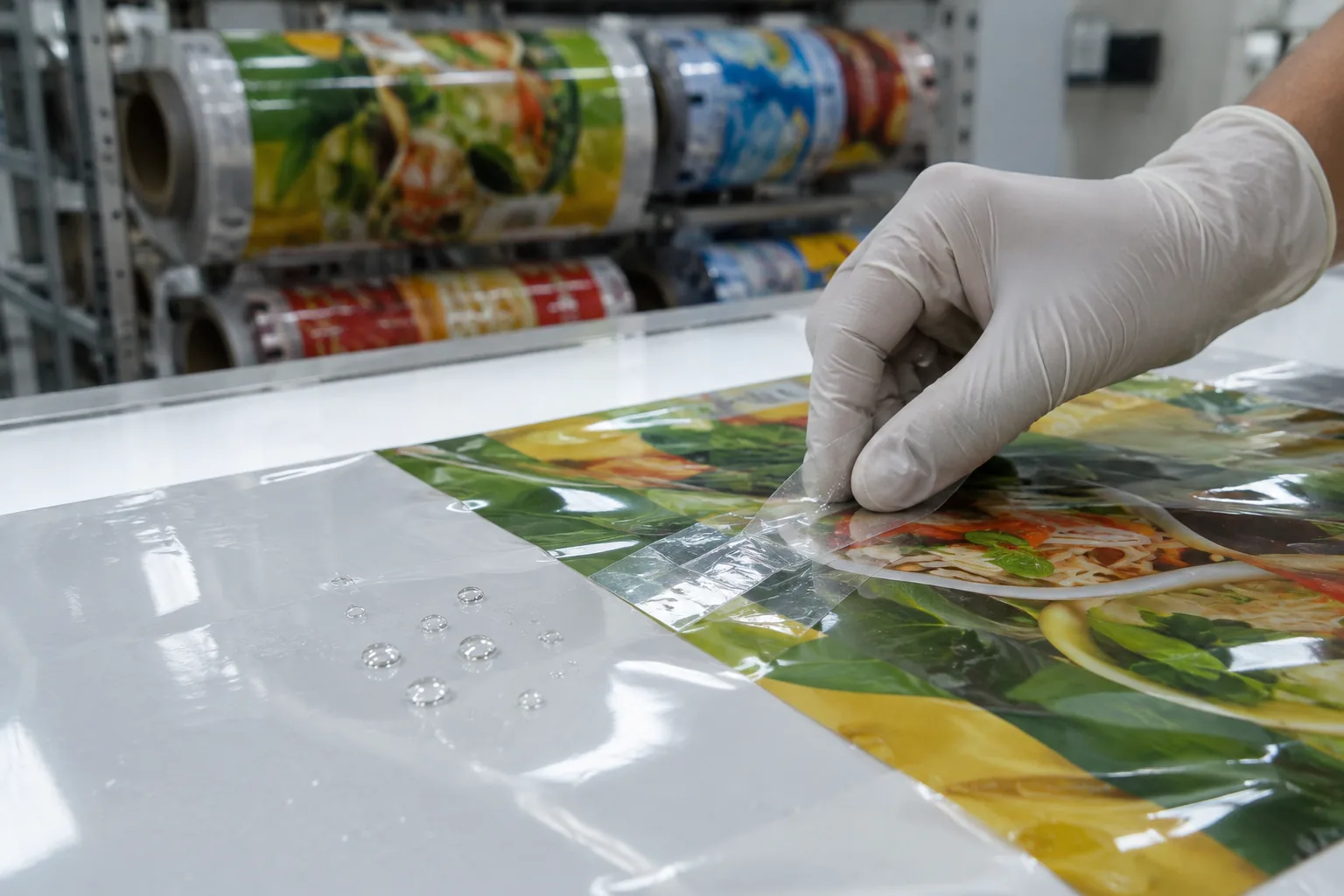
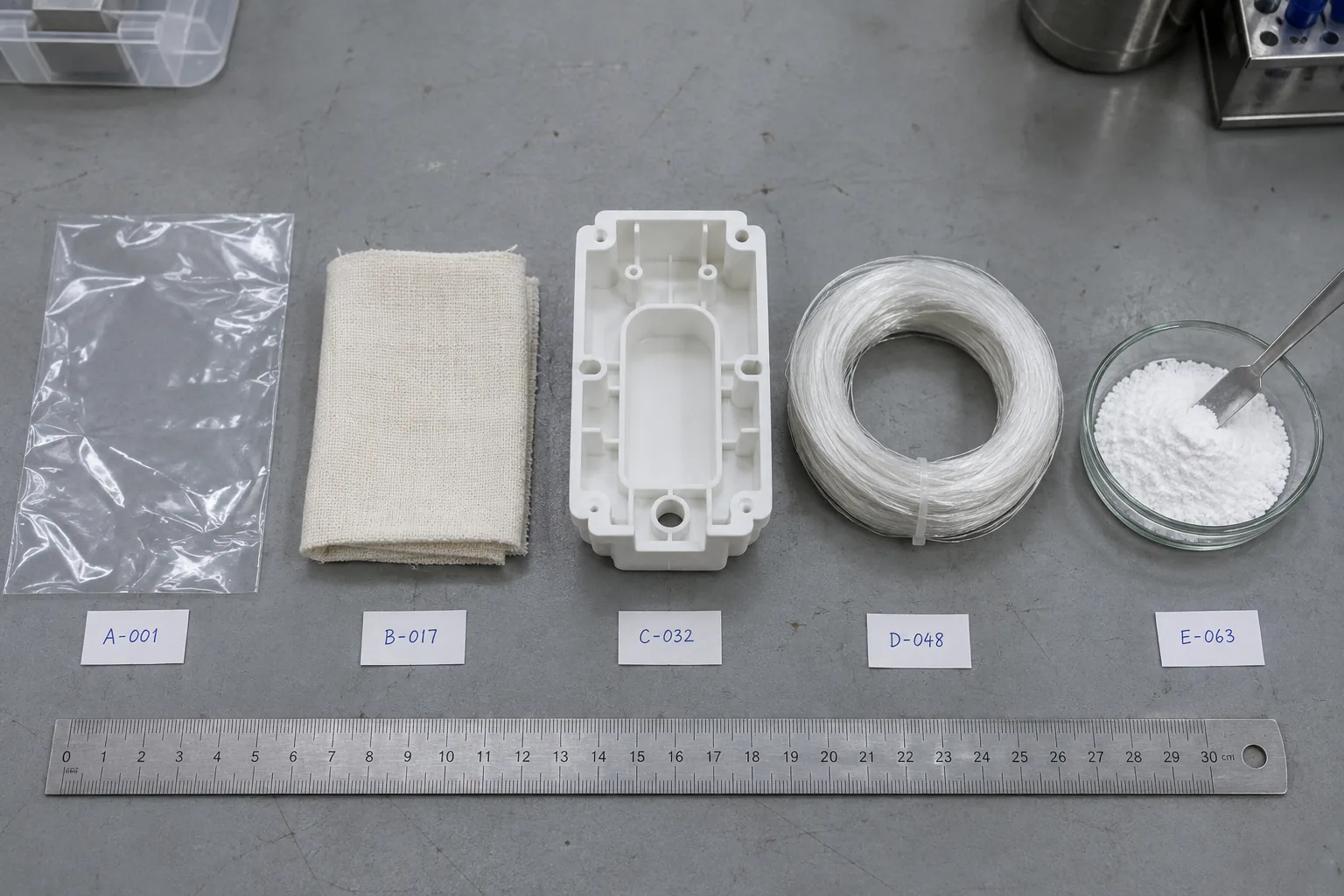
- Flexible packaging and labels: film converters, pouch and label printers with inconsistent ink adhesion
- Coatings: developers of protective or functional coatings for polymer sheets
- Plastic assembly: assemblers who bond components and see variable bond strength
- Textiles: finishers applying liquid finishes that do not distribute evenly
- Polymer powders: formulators dispersing powders in water-based systems who see floating powder or clumps
Cold plasma is one approach to modifying surface properties. The aim is to change how the surface responds to liquids while the bulk material continues to perform its original function. The Plasma Innovations team led by Assoc. Prof. Dr. Siwapon Srisonphan at Kasetsart University has studied seed surfaces with this approach since 2016, and across several systems plasma-treated seeds became easier to wet with water. Seed evidence does not mean every film, adhesive or coating will respond in the same way. It does establish that surface behavior can change. The next step is to test whether that change improves the application.
Keep in mindThe core idea of this page: measure whether the job gets better, not only whether the surface changes. Printing: does ink spread and adhere more consistently? Coating: is coverage more continuous? Bonding: is the joint stronger?
Diagnose before changing the material or formulation
Patchy ink, occasional bond failures or seed batches that absorb water slowly are symptoms, not causes. First separate the key variables: liquid formulation, cleanliness, curing, pressure, storage and surface condition. Then use a focused trial to identify which ones matter most. This keeps the first trial small and focused.
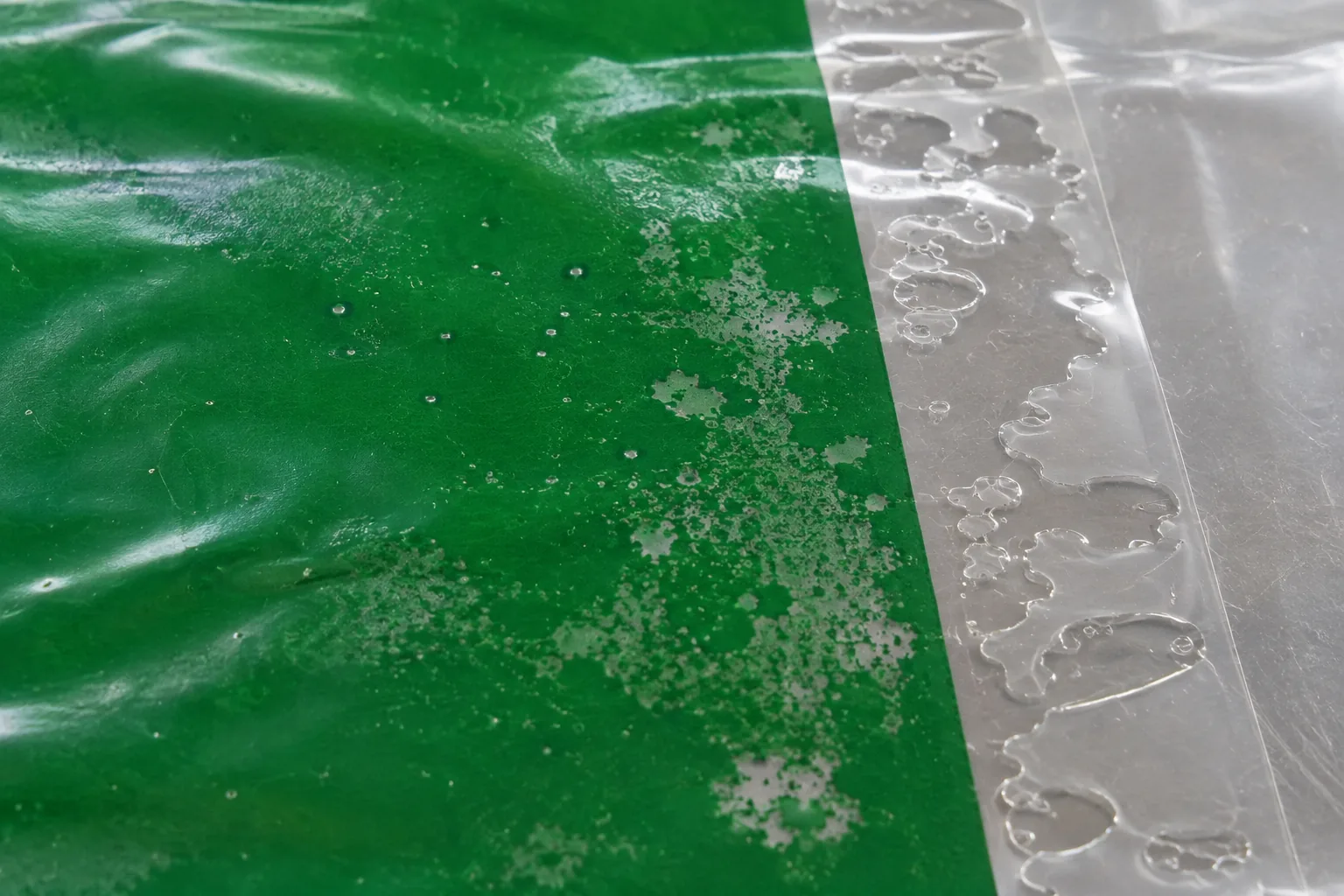
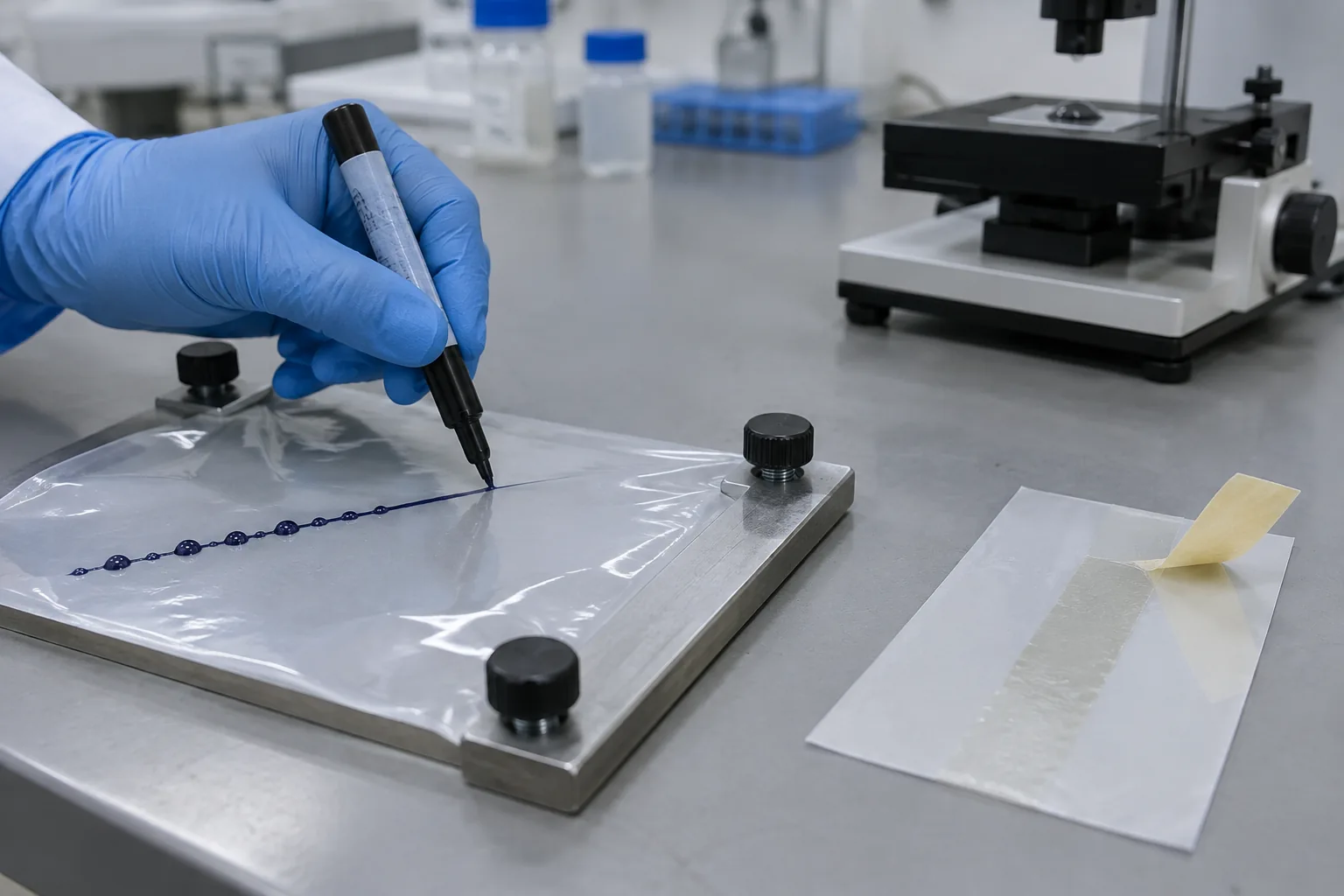
- Printing and coating: if ink or coating retracts, forms patches or leaves bare areas, compare spreading before and after treatment, then inspect the result after drying or curing.
- Bonding: better adhesive spreading does not necessarily make a stronger joint. Test the actual adhesive, components and curing method, and assess both bond strength and failure mode.
- Seeds: the team's sunflower study found poor water wettability before treatment and a clear improvement after plasma exposure under the conditions studied [1]. Always connect this result to the objective of the actual process.
- 1 · Observe the defect: what does it look like, does it affect every item or only some batches, and where does it occur?
- 2 · Separate the variables: what has changed in the material, liquid, cleaning method, cure, timing or storage conditions?
- 3 · Test one clear question: compare treated and untreated material under your actual process conditions, then measure an outcome directly relevant to the application.
The first trial should establish whether the surface contribution is large enough to justify further development. The simplest start is to choose one defect that causes rework, keep passing and failing samples, and record the materials, formulations and process steps used.
Start with a water droplet, then verify real performance
A water droplet offers a simple screen for whether the surface influences liquid behavior. If it beads on one surface but spreads on another, you have a clue for designing the next test.
The angle where the edge of a droplet meets a surface is the contact angle (θ). For a smooth, homogeneous surface at equilibrium, this angle relates to the interfacial energies between solid, liquid and gas, following the principle proposed by Thomas Young in 1805 [2]. Low surface energy materials, such as polyolefins or waxy surfaces, are generally difficult to wet with water. However, contact angle depends on the solid and liquid pair and on surface characteristics, so a single surface energy value cannot predict the behavior of every liquid. The Owens and Wendt model separates surface energy into dispersive and polar components, estimated from contact angles of at least two reference liquids [3]. This helps explain why the same surface responds differently to different liquids.
Seeds are curved and rough, and water may enter the seed during measurement, so the team calls the observed value the apparent contact angle (ACA). It depends on both the seed surface and the measurement method. The seed studies use three measurements that answer different questions; industrial work needs an application acceptance test on top.
| Measurement | Question it answers |
|---|---|
| Contact angle | How much does a droplet of a specified size bead up or spread on the surface? |
| Water droplet imbibition time (WI) | How long does that droplet take to disappear into the seed? |
| Overall water uptake | How much additional water does the whole seed sample absorb over time? |
| Application acceptance test | For example coverage and adhesion after drying or curing, or joint strength, using the liquid your process actually uses |
Keep in mindKey limitation: a lower contact angle shows that wetting has changed, but it does not prove that ink will adhere better or bonds will be stronger. In reel-to-reel DBD treatment of polypropylene films, Seidelmann and colleagues found that the tested solvent-based ink adhered well, whereas the UV-curable ink used in that study did not [4]. Always test the actual combination of material, formulation and process.
What cold plasma changes at the surface, and how to check it
Once the surface appears to contribute to the problem, choose a treatment that improves performance while retaining the material's original function. The key question is what should work better when the surface changes; plasma conditions and measurements are then chosen around that question. Four processes may occur on polymer surfaces [5].
- Surface cleaning: removes organic contamination or thin residues that interfere with contact between a liquid and the surface.
- Etching or ablation: changes surface texture and roughness, which can affect apparent contact angle and mechanical interlocking.
- Polar functional groups: oxygen-containing groups, such as hydroxyl, carbonyl or carboxyl groups, may increase the polar component of surface energy.
- Surface crosslinking: in some polymers, chains may crosslink, changing molecular structure and mobility near the surface.
The team examines three things together. Surface chemistry: elemental composition and chemical states by XPS, chemical groups by FTIR, with the method chosen to suit the depth of interest. Surface morphology: shape and roughness by scanning electron microscopy (SEM) and atomic force microscopy (AFM). Application performance: contact angle, imbibition and application tests.
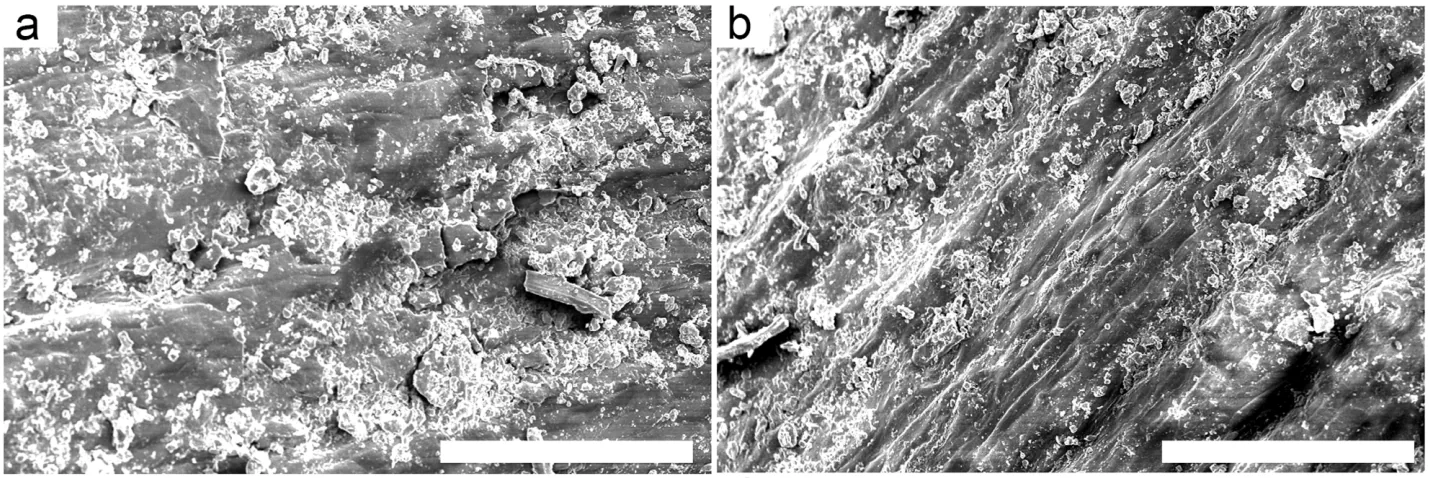
SEM can show whether surface morphology has changed, but on its own it cannot identify the chemical changes or quantify the improvement in actual performance. Read it alongside surface chemistry, wettability and relevant performance measurements. Further data should answer a new question that guides the next step, such as how long the effect lasts.
Keep in mindCold plasma does not mean the material cannot heat up: materials can still heat during plasma exposure, so measure temperature and check quality, especially when increasing treatment time or batch size. Also keep two goals distinct: modifying the existing surface (the seed wetting results on this page fall here) differs from depositing a new plasma coating, which is a separate research objective requiring its own process development and evidence.
Seed evidence: the surface can change a lot, but the numbers do not transfer
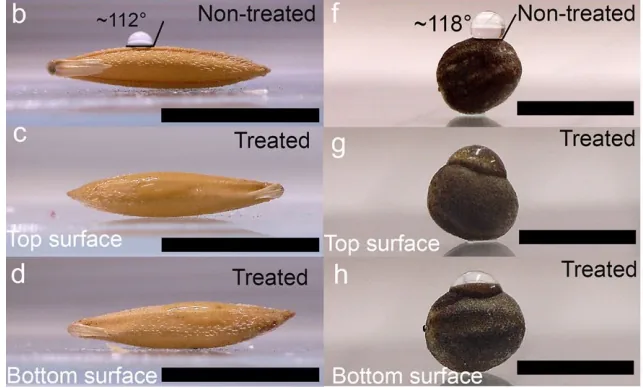
The team's sunflower study in Results in Engineering (2025) shows how much surface response can change under the conditions studied. The water contact angle was approximately 125° before treatment, falling to about 35° on the upper surface and 40° on the lower surface after dielectric barrier discharge (DBD) plasma treatment [1].

The useful lesson is not only the lower numbers but the measurement location. The upper and lower seed surfaces may receive different exposure; if your component has sheltered areas, grooves or curved surfaces, inspect the locations that determine actual performance. The same study also investigated plasma-activated water (PAW) and plant growth, so this wetting result does not establish that surface treatment alone produced all reported growth effects.
Read together, the team's seven papers are most useful for showing what the outcome depends on: seed type, gas, plasma generation method, exposure time, treatment location and time after treatment [1], [6]–[11].
| Study | Plasma · seed | Reported results (ACA and WI) |
|---|---|---|
| [6] 2016 | Corona combined with DBD (HCP), air or air–Ar · rice | ACA ~100° → ~0° (air–Ar, 1 min); ~76° (air only, 1 min) · WI ~30 → ~20 min (air only); almost immediate (air–Ar) |
| [7] 2018 | Corona (DCP) and pulsed hybrid corona (HCP), point-to-plane electrodes · rice | ACA ~110° → ~15° (DCP, 5 min); ~10–16° (HCP, 60 s) · WI ~20 → ~5 min (DCP); ~11 → ~4 min (HCP, 15→30 s) |
| [8] 2018 | DBD using energetic carrier impact ionization · rice | Wettability tunable through carrier energy; recovery during storage followed (see the storage section) |
| [9] 2020 | DBD · rice and cabbage | Upper and sheltered surfaces compared, with electric field modeling |
| [10] 2021 | Field-emission-enhanced streamer (HSCP) · rice | ACA ~120° → ~75° (air only, 1 min); → ~0° (Ar–air, 1 min) · WI ~13 min → 300–650 s (air only); → 20–200 s (Ar–air) |
| [11] 2022 | DBD · rice | Distinguishes the ACA plateau from time-dependent overall water uptake |
| [1] 2025 | DBD + PAW · sunflower | ACA ~125° → ~35° (upper) / ~40° (lower) |
The finding with most relevance to process engineering is a response approaching a plateau. Droplet imbibition time falls rapidly during the first few seconds, then approaches a steady value; beyond that, extra plasma exposure provides only limited improvement [7], [10]. Study [10] also models this relationship. Start with what outcome you need and when it is good enough, before asking how many seconds.
Keep in mindAll values in the table were measured on seeds (rice, cabbage, sunflower) under each study's conditions, not on films, components or industrial materials, and they should not be transferred as performance results for other materials. Films, adhesives and coatings require tests on their own materials and processes.
Sheltered sides do not respond like exposed ones: check every critical location
A good result in one area does not guarantee the same result across the whole object. Geometry, orientation, spacing and sheltered regions all influence how well plasma reaches critical surfaces. Differences between exposed and sheltered sides relate to the shadow effect. In the team's 2020 study (Plasma Chemistry and Plasma Processing), the upper and lower surfaces of rice and cabbage seeds were compared using droplet measurements and electric field modeling to interpret the results [9], and a 2021 study further examined the role of gas composition [10].
The same principle applies to industrial materials, starting from the actual material in each application and framing the access question around its geometry.
- Films and packaging: which side receives the ink or coating, and how uniform must treatment be across the web width?
- Textiles and fibers: should the liquid wet only the fabric face or penetrate the inner fibers?
- Components and assemblies: is the bonding area flat, around an edge or inside a groove that plasma may struggle to reach?
- Powders and particles: how can every particle receive adequate plasma exposure?
Keep in mindDo not measure only the easiest spot to reach. First identify the critical locations, such as the print face, adhesive contact area, coating groove or sheltered region, then check whether every location falls within the acceptable range.
Easier wetting is not enough: the real job must improve
A lower contact angle only indicates that the surface responds differently to a liquid. The more useful question is how this improves your process. Define the outcome first, such as acceptable print quality, load-bearing joints, uniform coatings or water uptake within the required time, then test with materials, liquids, waiting times and acceptance criteria close to actual use.
| Application | What to test | Desired outcome |
|---|---|---|
| Printing and coating | Coverage and adhesion after drying or curing, using the actual ink or coating | Meet appearance and durability requirements, or reduce coating defects |
| Bonding and assembly | Joint strength and failure mode under the specified adhesive, cure and service conditions | Joints consistently meet strength and durability criteria, with failure location and mode assessed |
| Textiles and finishing | Liquid absorption, finish distribution and fabric properties that must be retained | More uniform finish distribution without loss of fabric quality |
| Seeds and water uptake | Water uptake over time, target moisture level and relevant seed quality | A preparation window suited to the next step, with seed quality within specification |
The team's rice seed study in Journal of Physics D: Applied Physics (2022) distinguishes surface wetting from absorption by the whole seed. Even after treated surfaces became superhydrophilic, water uptake rates still depended on treatment level and observation time, and some short treatments differed from untreated seeds only during the early stages of soaking [11]. Once contact angles are very low, they may no longer distinguish important differences, so track the outcome over time.
Maximum wetting may not be the right target. Molina and colleagues found that plasma-treated nasturtium seeds took up more water, but germination did not improve under every watering condition. They proposed that water accumulating in the pericarp could restrict oxygen diffusion to the embryo; that mechanism was a proposed explanation, while the dependence on watering conditions was experimentally observed [12].
The effect fades during storage: test on the day of use
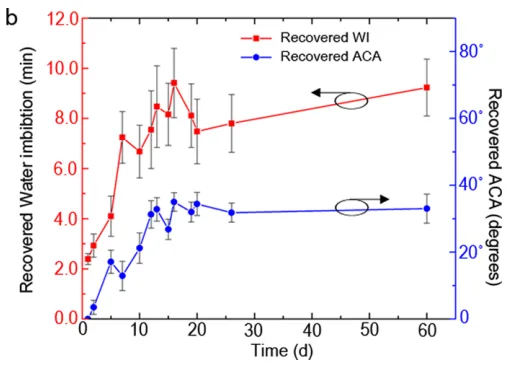
An immediate improvement may offer little value if the material must wait hours or days before use, so time belongs in the trial plan from the start. Measure at three points: immediately after treatment, after the actual waiting period (following handling, packaging and storage), and at the point of use, with the test that decides whether the material is still fit for the application.
In polymers, this is called hydrophobic recovery. Some polar groups may reorient below the surface, changing its interaction with water compared with the freshly treated state; the rate depends on polymer type, temperature and storage conditions [13]. Oberbossel and colleagues also followed storage effects on the wettability of polyethylene powders [14]. The review on PET describes recovery mechanisms in polymers; it does not establish that seed surfaces share every mechanism.
Seed surfaces recover too. The 2018 study in ACS Applied Materials & Interfaces followed treated rice seeds using both ACA and droplet imbibition time, and during storage both moved back toward more difficult wetting [8]. A declining effect does not necessarily make a treatment unusable; the question is whether the material still performs as required when used.
| Scenario | Question for the trial | Option to evaluate |
|---|---|---|
| Treating film before printing or coating | Does the printed or coated layer still meet specifications after the actual waiting period? | Treat close to the next step if the useful effect is short-lived |
| Preparing components before bonding | Does the joint still pass after the planned storage and handling? | Define the interval from surface preparation to bonding, and the handling method |
| Treating seeds before delivery or soaking | Are wettability, water uptake and seed quality still suitable at use? | Choose batch treatment or treatment close to use based on measured results |
If the effect lasts long enough, materials may be sent out for treatment and returned for use. If it fades quickly, treatment may need to happen near the point of use. Both options also depend on throughput, cost and practical handling.
Industrial starting points and the surface treatment technologies in use
Choose the example closest to your application, then frame the trial with real materials, actual liquids and pass criteria agreed before testing. This table lists trial directions, not confirmed results: the team's own evidence comes from seeds, while the film, cotton and polyethylene powder examples come from external studies [4], [14], [15].
| Application | What to bring | What to test and measure |
|---|---|---|
| Printing on film (flexible packaging, pouches, labels) | One combination of your actual packaging film and ink | Compare untreated film, your existing preparation method and plasma treatment. Assess ink coverage and adhesion after drying or curing, including the actual delay before printing. Measure the proportion of pieces meeting jointly agreed criteria |
| Coating polymer sheets | Your actual polymer sheet or component and coating formulation | Assess spreading, coverage, adhesion and durability. Test different delays before coating while keeping the curing method constant, with substrate properties remaining within specification |
| Bonding plastic components | Actual components or representative joint specimens, with the production adhesive | Compare existing preparation with plasma treatment. Measure load capacity, variation between specimens and failure location after the specified curing and aging tests |
| Textile finishing | Your fabric or technical textile, with the current finish, dye or coating | Measure penetration and distribution, and check handle, strength and wash durability. Easier wetting of the fabric face does not necessarily mean penetration into the interior. Kan and Man found that atmospheric plasma parameters jointly influence the wetting of cotton fabric [15] |
| Polymer powders | The powder or particles, and the liquid or matrix in which they need to wet or disperse | First establish how to expose the powder to plasma, then keep powder quantity and mixing method constant and assess wetting speed, floating, clumping and settling, repeating after storage. A polyethylene powder study in a fluidized bed reactor followed both wettability and aging [14], and the ETH Zurich group identifies particle movement as central to uniform powder treatment [16] |
Industrial surface treatment takes several forms, and selection depends on the material, geometry and handling method. This qualitative table compares common application formats rather than mutually exclusive categories: corona is itself a form of atmospheric-pressure discharge.
| Technology | Principle | Example materials and formats | Key considerations |
|---|---|---|---|
| Corona for web materials | Discharge in the gap between an electrode and material moving over a roller | Continuous films and flat sheets | Control of gap, speed and uniformity across the width [17] |
| Flame treatment | Rapidly oxidizes the surface using a flame with a controlled fuel-to-air ratio | Molded plastic components and three-dimensional surfaces | Precise control of heat, distance and exposure time [18] |
| Low-pressure plasma | Treatment inside a reduced-pressure chamber; systems may be designed for batches or moving webs | Components that fit in a chamber, or webs conveyed through vacuum systems | Requires vacuum equipment and arrangements of material, gas and electrodes suited to the required uniformity [19] |
| Other atmospheric-pressure plasma, such as plasma jets and DBD for components | Discharge at atmospheric pressure without a vacuum system | Continuous or localized treatment, depending on the source design | Check access, uniformity and actual temperature, especially for curved surfaces, grooves and heat-sensitive materials [20] |
Keep in mindYou do not need to know in advance whether to use DBD, corona, a particular gas or a specific voltage. Let samples and acceptance criteria guide decisions about buying or building equipment: first establish whether surface treatment solves the problem, then use the results to define the system format, capacity and installation point.
From one promising result to a repeatable process
Start with your material, problem and definition of better, not plasma specifications. Plasma Innovations contributes plasma expertise and trial design; partners contribute material and process knowledge. Agree a one-page trial brief together before starting.
| What to agree | Questions to answer |
|---|---|
| The job to be done | What should improve in the ink, adhesive, coating or liquid uptake step, and which rework or uncertainty should it reduce? |
| Samples and comparators | Which material lot and formulation will be used? How will the existing preparation method be compared? Are untreated controls also needed? |
| Decision measures | How will surface changes and actual performance be measured? Which values or ranges count as a pass? |
| Waiting time and properties to preserve | How long will materials wait before use, and under what conditions? What requirements apply to color, strength or seed quality? |
| Consistency and next steps | Which locations, repetitions and batches are needed to make a decision? What findings mean proceed, refine or stop? |
- Proceed: relevant results justify testing under conditions closer to actual use.
- Refine the brief: the findings suggest a change in material, measurement or process question.
- Stop: the evidence does not yet justify further investment in this approach, which is a valuable answer too.
Once the first sample performs well, the next step is to reproduce the result across batches, larger quantities, wider webs, higher speeds or different component orientations. Discrete items such as seeds need checks on access, orientation and batch-to-batch consistency; continuous webs such as film or fabric need performance across the full width at the required line speed; individual components need localized treatment and a defined interval before assembly. Then choose between testing services, batch surface treatment, joint process development or integration into a production line.
Keep in mindThe study sequence and collaboration formats in this section are proposed approaches; sample suitability, resources, scope and pilot or on-site work are confirmed for each project. The team also researches seed microbial reduction, seed preparation for hydroponics and plasma-activated water; this work shows experience in plasma system design but is not evidence for the material surface treatment covered on this page.
Send your surface problem for a small, focused trial
Send the research team your material, the problem you see and your definition of better, such as a peel value, dyne level or tape test result, and we will design a small trial together against untreated material and your current preparation method. Samples, comparators, test methods, pass criteria and reporting are agreed before starting. The results help you decide whether to proceed, refine the brief or stop before investing in equipment. Contact [email protected]
Email the research team[email protected]See other cold plasma use cases →What to prepare
- The material, its shape and which surface affects performance
- The next step: the ink, coating, adhesive or liquid used, and the curing or drying conditions
- The current problem: what fails specifications, varies, takes too long or creates waste
- Your definition of better, and the value that counts as a pass
- The interval between treatment and actual use, and the storage conditions
- Properties that must be preserved, such as color or strength
References
- Srisonphan S., Tephiruk N., Homkanchan S., Puttha J., Suwannarat S., Teerakawanich N. (2025). Synergistic DBD plasma and plasma-activated water enhance sunflower seed surface wettability and germination. Results in Engineering, 26, 105434. doi:10.1016/j.rineng.2025.105434
- Young T. (1805). An essay on the cohesion of fluids. Philosophical Transactions of the Royal Society of London, 95, 65–87. doi:10.1098/rstl.1805.0005
- Owens D. K., Wendt R. C. (1969). Estimation of the surface free energy of polymers. Journal of Applied Polymer Science, 13(8), 1741–1747. doi:10.1002/app.1969.070130815
- Seidelmann L. J. W., et al. (2017). Reel-to-reel atmospheric pressure dielectric barrier discharge (DBD) plasma treatment of polypropylene films. Applied Sciences, 7(4), 337. doi:10.3390/app7040337
- Dufour T. (2023). From basics to frontiers: A comprehensive review of plasma-modified and plasma-synthesized polymer films. Polymers, 15(17), 3607. doi:10.3390/polym15173607
- Khamsen N., Onwimol D., Teerakawanich N., Dechanupaprittha S., Kanokbannakorn W., Hongesombut K., Srisonphan S. (2016). Rice (Oryza sativa L.) seed sterilization and germination enhancement via atmospheric hybrid nonthermal discharge plasma. ACS Applied Materials & Interfaces, 8, 19268–19275. doi:10.1021/acsami.6b04555
- Teerakawanich N., Kasemsuwan V., Jitkajornwanich K., Kanokbannakorn W., Srisonphan S. (2018). Microcorona discharge-mediated nonthermal atmospheric plasma for seed surface modification. Plasma Chemistry and Plasma Processing, 38, 817–830. doi:10.1007/s11090-018-9894-2
- Srisonphan S. (2018). Tuning surface wettability through hot-carrier-initiated impact ionization in cold plasma. ACS Applied Materials & Interfaces, 10, 11297–11304. doi:10.1021/acsami.7b19495
- Srisonphan S., Ruangwong K., Thammaniphit C. (2020). Localized electric field enhanced streamer cold plasma interaction on biological curved surfaces and its shadow effect. Plasma Chemistry and Plasma Processing, 40, 1253–1265. doi:10.1007/s11090-020-10098-8
- Srisonphan S., Kasemsuwan V. (2021). Field electron emission enhanced streamer cold plasma interaction on seed surface wettability. Surfaces and Interfaces, 22, 100877. doi:10.1016/j.surfin.2020.100877
- Rongsangchaicharean T., et al. (2022). Effect of dielectric barrier discharge plasma on rice (Oryza sativa L.) seed hydration and hygroscopicity. Journal of Physics D: Applied Physics, 55, 365201. doi:10.1088/1361-6463/ac791d
- Molina R., et al. (2018). Influence of irrigation conditions in the germination of plasma treated Nasturtium seeds. Scientific Reports, 8, 16442. doi:10.1038/s41598-018-34801-0
- Primc G., Mozetič M. (2022). Hydrophobic recovery of plasma-hydrophilized polyethylene terephthalate polymers. Polymers, 14(12), 2496. doi:10.3390/polym14122496
- Oberbossel G., Probst C., Giampietro V. R., Rudolf von Rohr P. (2017). Plasma afterglow treatment of polymer powders: Process parameters, wettability improvement, and aging effects. Plasma Processes and Polymers, 14(3), 1600144. doi:10.1002/ppap.201600144
- Kan C. W., Man W. S. (2018). Parametric study of effects of atmospheric pressure plasma treatment on the wettability of cotton fabric. Polymers, 10(3), 233. doi:10.3390/polym10030233
- ETH Zurich, Transport Processes and Reactions Laboratory. Plasma Processes. ltr.ethz.ch/en/research/plasma_processes.html
- Vetaphone. Frequently Asked Questions: Corona Treatment. www.vetaphone.com/about/faq/
- Enercon Industries. Flame Surface Treater. www.enerconind.com/plasma-treating/plasma-flame-treaters/flame-series/
- Fraunhofer IFAM. Modifying and coating surfaces cost-effectively with low-pressure plasma. www.ifam.fraunhofer.de/en/technologies/low-pressure-plasma-surface-modification.html
- Fraunhofer IFAM. Efficient and sustainable surface modification with atmospheric pressure plasma. www.ifam.fraunhofer.de/en/technologies/atmospheric-pressure-plasma.html