5.3%Separation index in a mineral sunscreen, vs 36.0% with PHS
Methyl polyricinoleateIngredient name (INCI) of EstoLight-1E
From seed to formula
One molecule, four steps
How a castor bean becomes a liquid dispersant that can go straight into a cold-process formula
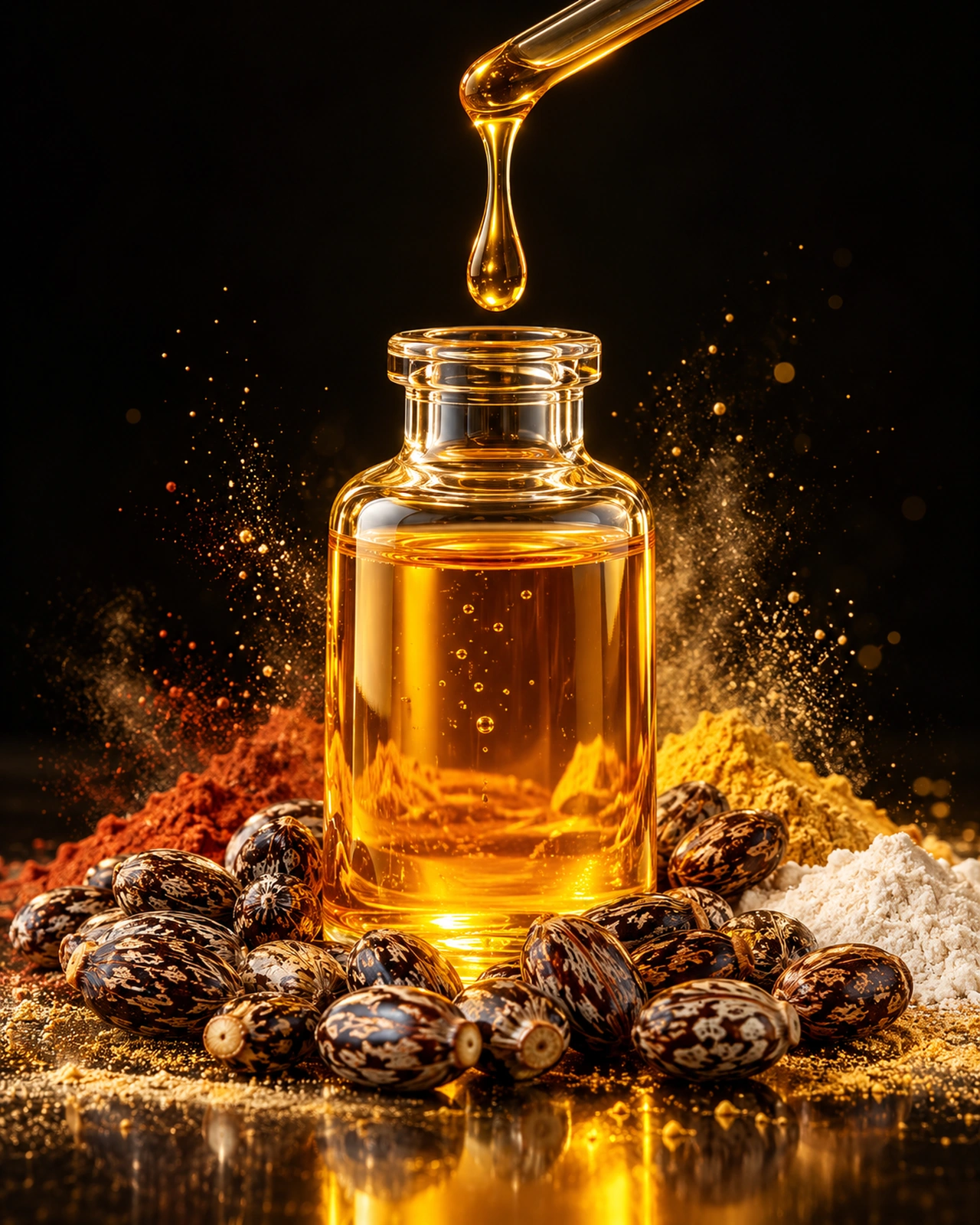
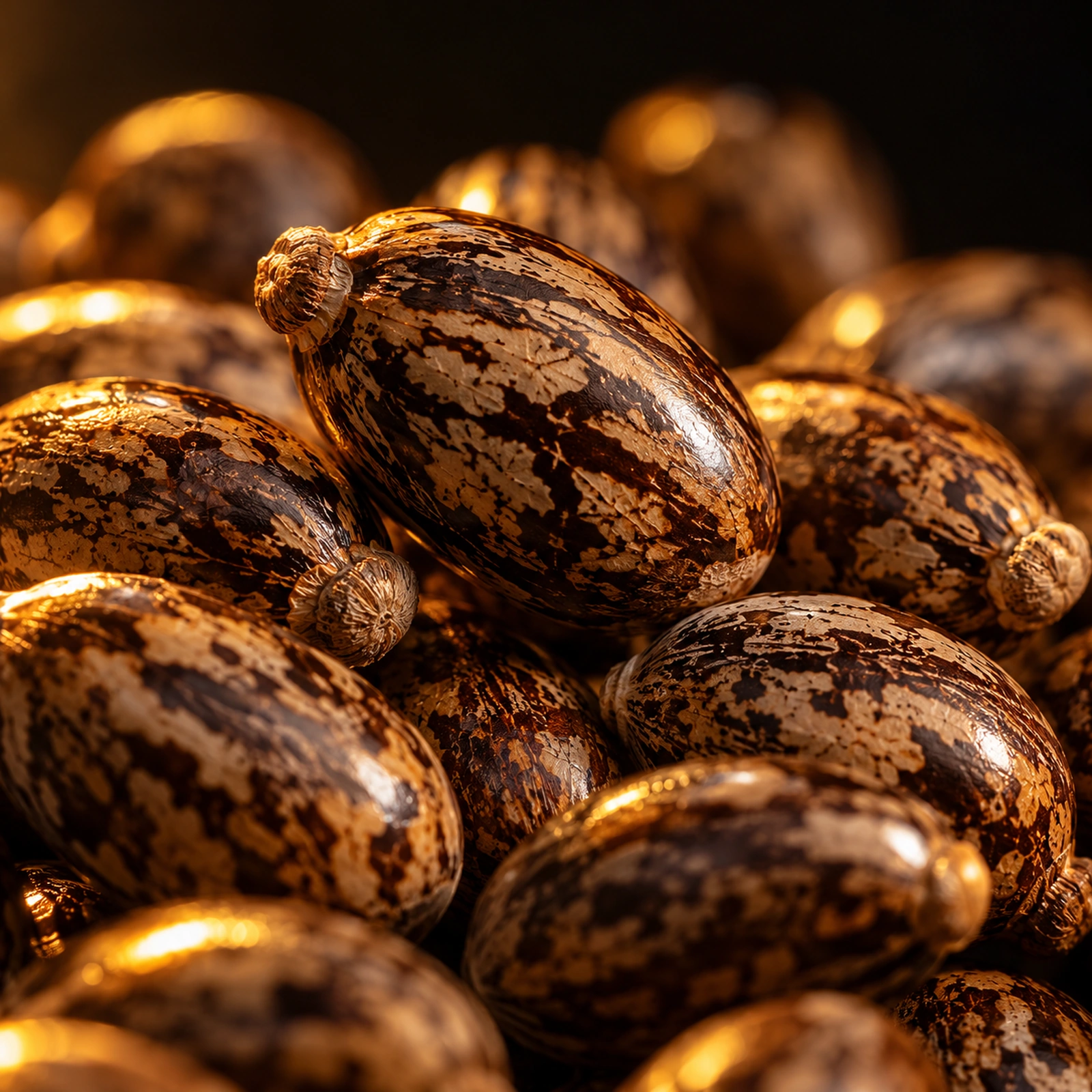
01Castor seeds
Castor oil is the plant source. EstoLight-1E is palm-free
Plant source
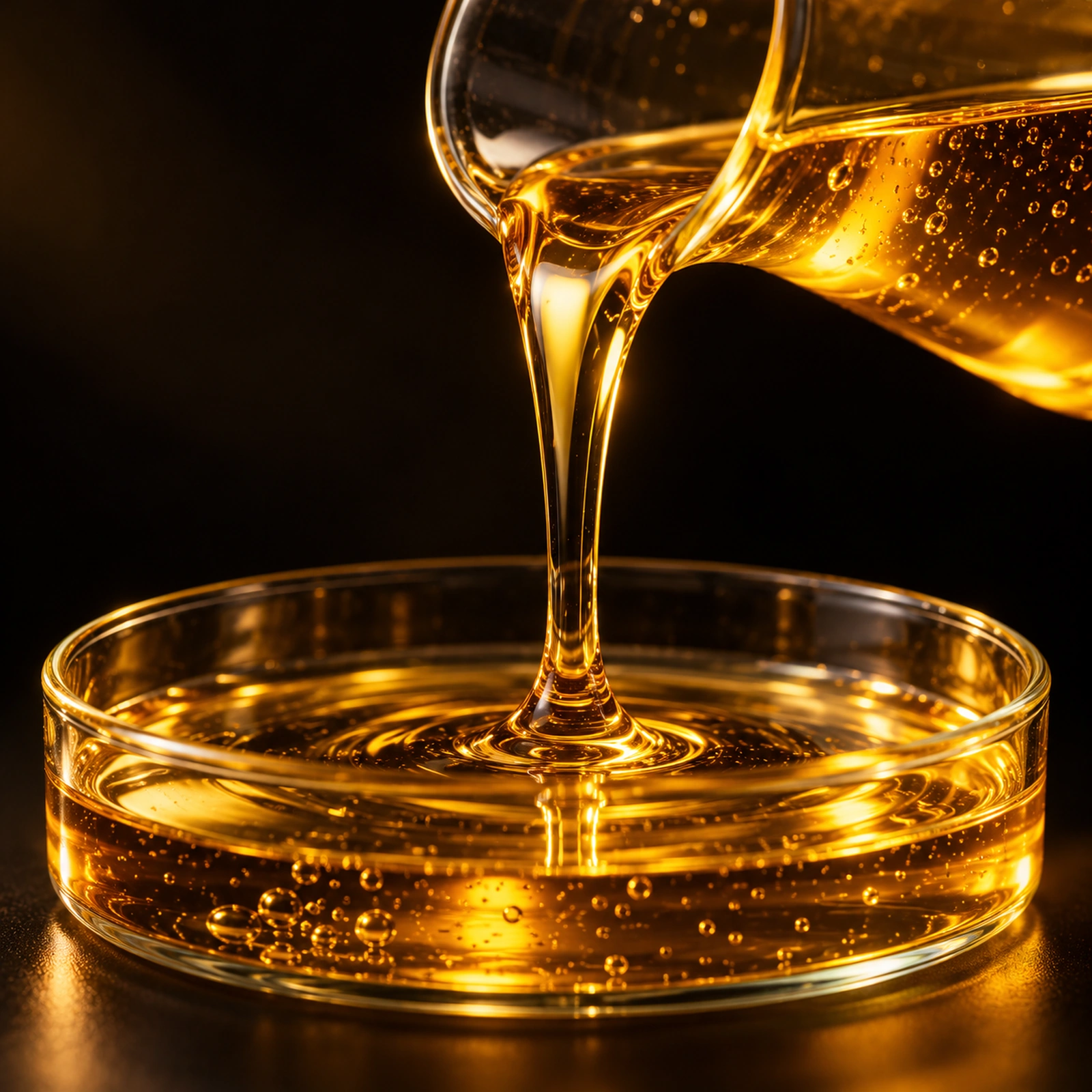
02Castor oil
Pressed from the seeds. Its main fatty acid is ricinoleic acid, with a hydroxyl group in the middle of the chain
Ricinoleic acid · C18
03Estolide polymer
Fatty acid units linked by ester bonds into an oligomer chain, a patented ITERG route
Polymerization
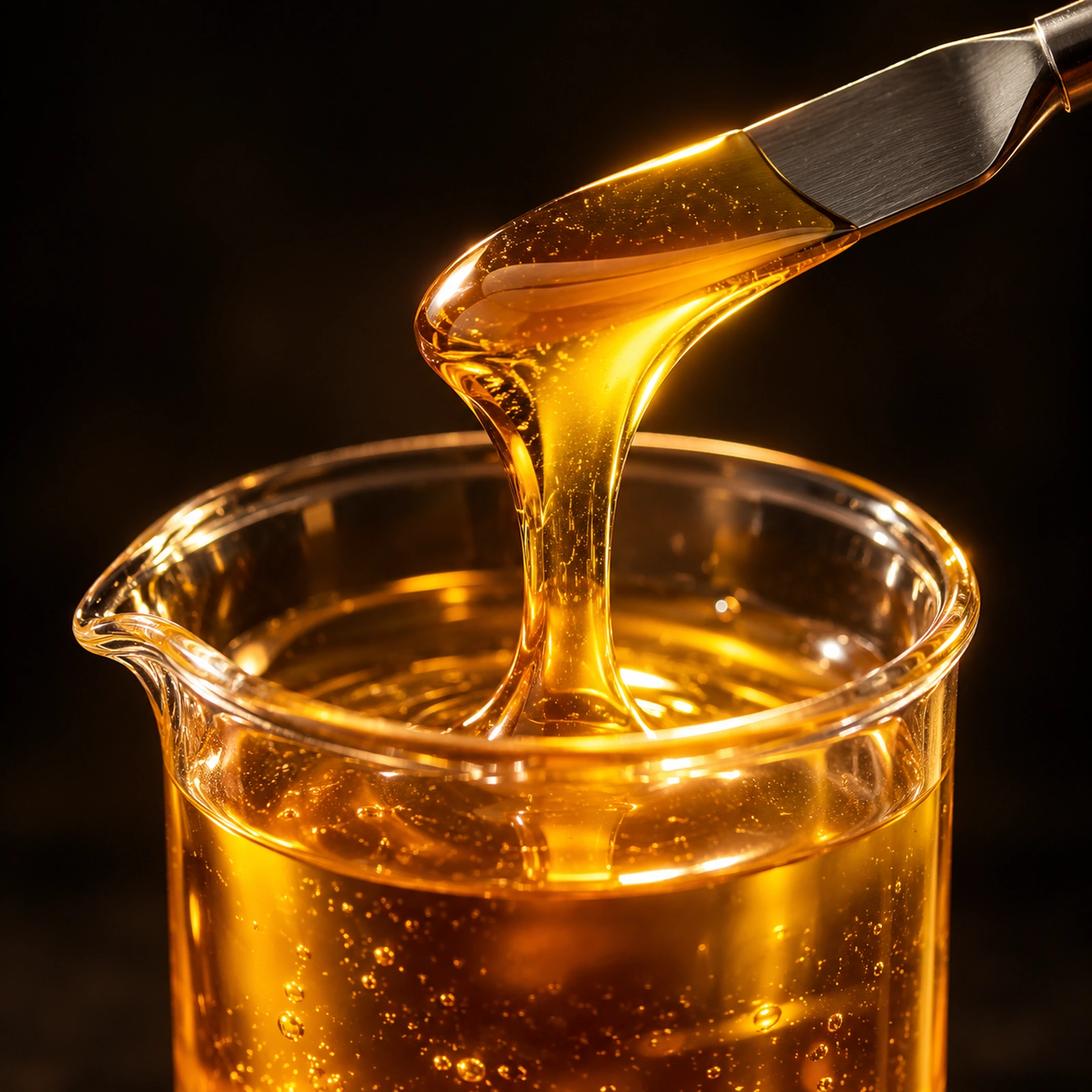
04EstoLight-1E
A yellow-orange viscous liquid at room temperature. No melting or preheating
Ready to use
Deep Tech Innovator · Technology owner
Eighty years of oils and fats. Then a dispersant made from castor oil.
ITERGFrench Technical Centre for Oils and Fats · Canéjan, near Bordeaux
ITERG is an industrial technical centre that works across the lipid value chain: analysis laboratories, formulation, pilot plants and production. Its oleochemistry team began work on estolides with academic partners to replace fossil-derived carbon with lipid chemistry. EstoLight is the cosmetic ingredient brand that grew out of that work
Interview with the ITERG team · Not available yet, to be added
1943Year founded
97Employees
500+Customers worldwide
~25,000Samples analysed a year
>300 tPlant material processed a year
3Patents in ITERG’s estolide timeline
Figures from ITERG’s presentation to TIBD, 13 October 2026
The idea in one line
“
A concentrate of innovation for your formulations
Didier PintoriProduct Manager, ITERG · EstoLight line
A spoken quote will replace the brand line once the interview is done
1943ITERG founded in France as the technical centre for oils and fats
2011Patent WO2011030075: new castor oil derivatives, the starting point of estolides
Scale-upOleochemistry unit with 100 L and 2 m³ reactors. Two further patents follow
2025EstoLight brand created for cosmetic ingredients
2026Annual production of 50 tonnes for cosmetics. Seminar with TIBD in Bangkok, 13 October
The EstoLight rangeStatus as presented by ITERG, October 2026
Available · liquid gradeEstoLight-1E
Methyl polyricinoleate. Liquid, suitable for cold process, disperses particles and helps solubilize or disperse active ingredients
Customer exclusivityEstoLight-1AH
Polyhydroxystearic acid grade. Focused on pigment dispersion and co-stabilizing emulsions
Under developmentNew EstoLights
Further estolides with tuned chain length, polarity and stability
ServicesFormulation and analysis
ITERG laboratories offer formulation, texture analysis, LUMiFuge stability and microscopy
Contact the technology owner directlyITERG
Technical data, samples and formulation support. 11 rue Gaspard Monge, ZA Pessac-Canéjan, CS 20428, 33612 Canéjan, France
A plant-based polymer that wets the particle surface and keeps each particle separate in oil
Pigments, mineral UV filters, mica and glitter tend to stick together and settle. A dispersant coats the particle surface so particles stay spread through the oil phase. ITERG built EstoLight-1E as a liquid estolide so it can be stirred in by hand, with no melting step, in emulsions or fully anhydrous formulas
Liquid, does not crystallizeCold-process compatibleWater-in-oil, oil-in-water and anhydrous
Illustration, not to scaleLeft: particles without a dispersant clump and settle. Right: particles coated by a dispersant stay spread through the oil
Why the form of a dispersant mattersAs described by ITERG
ProblemClumping
Aggregated pigment gives uneven colour and lower coverage
ProblemSedimentation
Heavy particles settle in storage, and emulsions can separate
Common practiceSolid or paste dispersants
Many market references must be melted first, which adds heat and time to production
EstoLight-1ELiquid at room temperature
Stirred in directly at 1–5%, including cold-process and heat-sensitive formulas
Product identity
EstoLight-1E at a glance
Key data from ITERG’s technical data sheet and product dossier (version 2, 24 September 2025)
IDENTITY AND USE
INCI name
Methyl polyricinoleate
CAS
1009828-51-6
Function
Polymeric dispersant, dispersion stabiliser
Origin
Plant-derived (castor), palm-free, non-animal
Natural origin index
>99%ISO 16128
Appearance at 20°C
Yellow to orange viscous liquid, light oil odour
Soluble in
Vegetable oils, butters, waxes, esters
Use level
1–5%Tested in formulas with 1–50% pigment
Formula types
Direct and inverse emulsions, anhydrous
Dispersed particles
Mineral, organic and synthetic
SPECIFICATIONS AND PACKAGING
Water content
≤ 0.1 g/100 g
Colour (Gardner)
≤ 7.0
Acid value
≤ 1.0 mg KOH/g
Hydroxyl value
15–40 mg KOH/g
Viscosity at 20°C
0.7–1.6 Pa·s
Molecular weight
Mn 1,700–3,500Mw 3,500–7,000 g/mol
Oxidative stability
> 70 hNF ISO 6886
Packaging
Packed under nitrogen190 kg drums · 900 kg IBC · other sizes on request
Storage
Away from light, below 30°C
Recommended re-test
2 years
Safety and environmentManufacturer data · not a safety assessment of any finished product
TOXICOLOGY
Acute oral toxicity (rat), LD50
> 2,000 mg/kgOECD 423
Skin irritation
Not classifiedOECD 439
Eye irritation
Not classifiedHET-CAM
Skin sensitization
Non-sensitizingOECD 442C, 442D, 442E
Mutagenicity
Not classifiedOECD 471
Phototoxicity
Not classifiedOECD 432
ENVIRONMENT AND QUALITY
Ready biodegradability
61.7%OECD 301B
Biodegradation in natural soil
82.1 ± 0.7%ISO 17556
Heavy metals
Each below 0.5 ppm in the dossier
Process
Polymerization, no solvent used
EU Cosmetics Regulation annexes II–VI
Not listed
QUALITY AND REGULATORY
ISO 9001ISO 22716 (GMP)REACH exempt (polymer)Non-GMOCOSMOS: ask for current status
Sources: EstoLight-1E technical data sheet and product dossier, ITERG, 24 September 2025. Country inventory status is in the dossier; ask TIBD for the full documents
Test results
Six test formulas, one comparison that matters
ITERG benchmarked EstoLight-1E against PHS (polyhydroxystearic acid), a widely used dispersant, in the same formulas. These are the manufacturer’s laboratory results
Mineral sunscreen · W/OLower separation under accelerated ageing
17.5% zinc oxide and titanium dioxide, 1.3% dispersant. LUMiFuge centrifugation at 2,000 ×g, 25°C, 2 hours
EstoLight-1E5.3%
PHS36.0%
Separation index, lower is more stable. The formula also showed no separation after 3 months at 40°C or 50°C, spread more easily and left no white marks in ITERG’s evaluation
Organic sunscreen · O/WMore fluid formula and a higher in-vitro reading
Labsphere measurement following an adapted ISO 24443 method on ITERG’s test formula. This is not an SPF value or claim for any finished product, which must be tested on the final formula
All six test formulasUse level of EstoLight-1E in brackets
Anhydrous · 50% pigmentPigment paste (4.5%)
TiO₂ and iron oxide in caprylic/capric triglyceride, mixed by hand and three-roll milled
Easy manual dispersion, appearance and stability similar to PHS
Manganese violet in a sucrose stearate emulsion, checked by microscopy and LUMiFuge at 1,000 ×g
Fine, non-aggregated dispersion and no phase separation
Sister grade EstoLight-1AHCustomer exclusivity · results shown by ITERG on 13 October 2026
Ultramarine blue2.7×
Slower sedimentation than the reference without EstoLight, at 2,000 ×g, 2 h, 25°C
Black, yellow and red iron oxide6.3× · 4.0× · 1.6×
Slower sedimentation, by pigment, under the same test conditions
Natural plant pigment paste35% → 50%
Maximum loading of a Solidago virgaurea pigment in sunflower oil, without and with EstoLight
Sources: EstoLight-1E presentation, ITERG, 24 September 2025, and ITERG seminar slides, 13 October 2026. One customer also reported that EstoLight-1E gave a more homogeneous ZnO sunscreen with fewer white marks than four other dispersants
Proof of concept with TIBD
Thai botanical actives, dispersed in oil
TIBD and ITERG tested 8% EstoLight-1E with three concentrated Thai extracts that are hard to disperse in oil. ITERG presented the results at the Bangkok seminar
Black ginger · 4%Black ginger extractKaempferia parviflora · polymethoxyflavones
WithoutWith EstoLight-1E
Without the dispersant the extract formed a muddy, clumped mass. With EstoLight-1E it became a uniform orange-brown suspension
Turmeric · 2%Turmeric extractCurcuma longa · curcuminoids
WithoutWith EstoLight-1E
Without the dispersant the mix was murky olive-green and aggregated. With EstoLight-1E it was bright and finely dispersed
A bio-based polymer made from castor oil (INCI: Methyl polyricinoleate), patented by ITERG. It is a liquid dispersant that helps keep pigments, mineral UV filters, mica and other particles evenly spread in oil phases, emulsions and anhydrous formulas
How is it different from PHS?
Both are dispersants. ITERG’s point of difference is the form: EstoLight-1E is liquid at room temperature, does not crystallize and needs no melting. In ITERG’s mineral sunscreen test it gave a separation index of 5.3% against 36.0% for PHS
How much should I use?
ITERG tested 1–5% in most formulas, with pigment loadings from 1% to 50%. The proof of concept with Thai botanical extracts used 8%. The right level depends on the particles and the formula, so start from a trial
Can it be used in cold-process formulas?
Yes. It is liquid and ready to use, so it can be stirred in without preheating. This also suits heat-sensitive ingredients
Can I make an SPF claim based on the +74% result?
No. The +74% was an in-vitro reading on ITERG’s own test formula compared with PHS. The SPF of any product must be measured on the finished formula by a recognised method before it is stated on the label
Can it be used in cosmetics sold in Thailand?
Methyl polyricinoleate is not listed in the EU annexes of prohibited or restricted substances according to ITERG’s dossier. Each finished product still needs its own Thai FDA notification, and TIBD can help prepare the ingredient documents
How do I get a sample?
Contact the TIBD team with your product type and the particles or actives you want to disperse. TIBD coordinates samples and documents with ITERG


 01Castor seeds
 02Castor oil
 03Estolide polymer
 04EstoLight-1E