

Cold Plasma / UC03
Use case UC03 · Seed health
Seeds can germinate. Is the lot ready?
Before sowing or releasing a large seed lot, find out together how far the target pathogen has declined, whether seeds still germinate well, and whether seedlings are ready for the next stage. This page summarises cold plasma research on Chinese kale and cabbage seeds to help you choose what to measure and prepare a trial with an actual lot.
Research by Assoc. Prof. Dr. Siwapon Srisonphan and the Plasma Innovations team, Department of Electrical Engineering, Kasetsart University
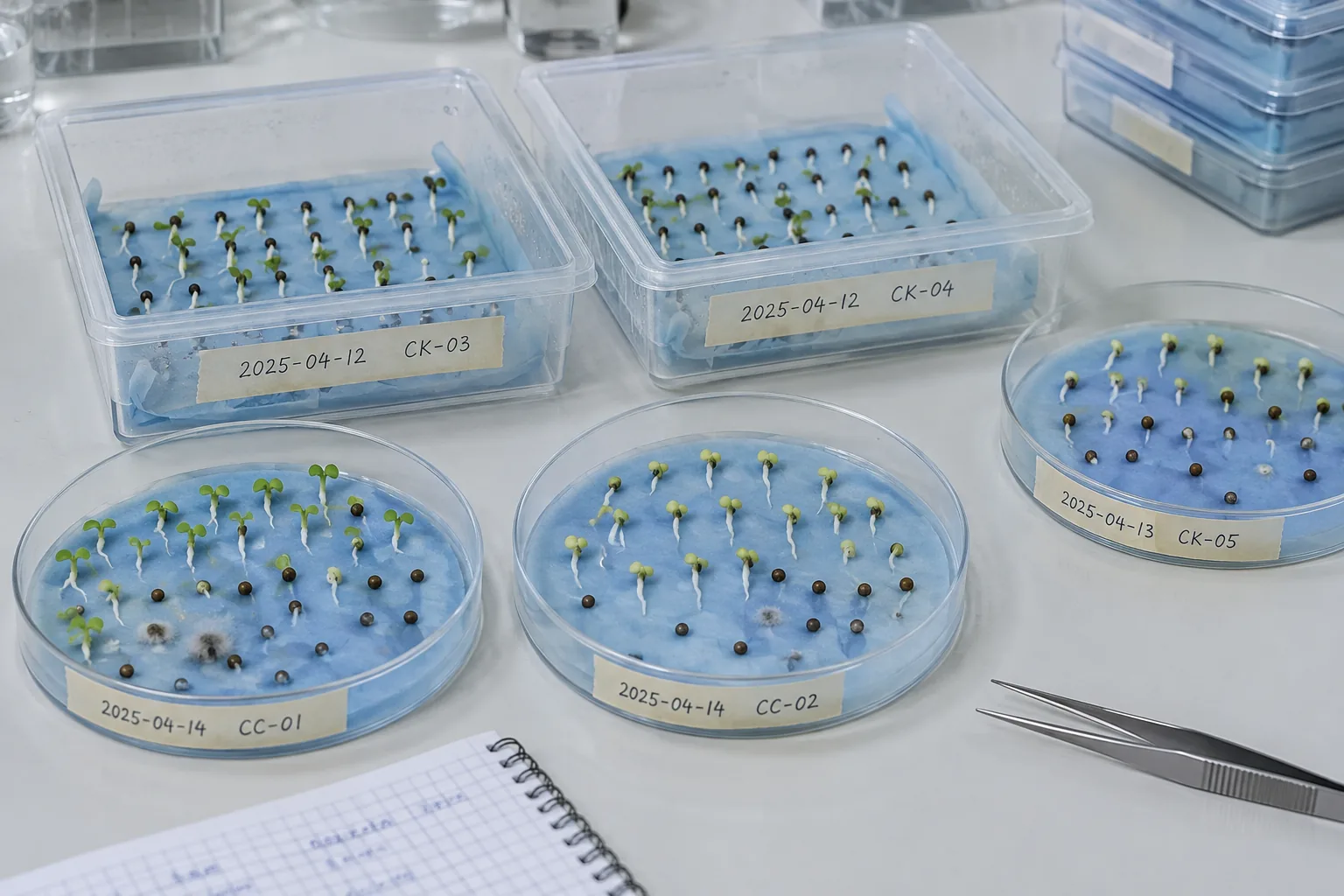
57% → 78%Healthy seedlings from naturally contaminated Chinese kale seeds, control versus SCD, while germination was 95–96% in every group
≈60% → ≈20%Alternaria incidence in germinated Chinese kale seeds, control versus ESDP for 60 minutes, assessed on day 7 and read from the graph
98% → 37%/41%Proportion of cabbage seeds testing positive for Xcc, control versus GLIP/PAW: a decline of 61/57 percentage points, not a CFU reduction
Figures in this article are laboratory results under the conditions of the cited studies. Results with your own lot or growing system need to be tested.
Before releasing a lot, you need more than a germination percentage
Seeds can germinate well and still carry pathogens. Before releasing a lot into the nursery, ask both “How many seeds germinate?” and “Do we know enough about this lot's seed health?” The outcome you need goes beyond pathogen reduction: seedlings ready for the next stage.
A result you can act on must answer three questions together, against criteria agreed before the trial:
- Target pathogen: has it declined enough to meet the agreed criterion? Use a test suited to treated seeds
- Germination: does it still meet the lot's acceptance criteria? Use the same method and assessment time for every group
- Seedling quality: are seedlings ready for the next stage? Count them using a definition agreed before the trial
If every criterion passes, test consistency and fit with your operation. If any fails, investigate and adjust before scaling. This page is written for seed companies, seed health or QA teams and seed-treatment R&D, with nurseries and growers as the ultimate beneficiaries.
Low contamination still matters at lot scale
Some plant pathogens travel with seeds, on the surface or inside them, so moving seed can introduce pathogens into new growing areas. An important example is black rot of brassicas, caused by the bacterium Xanthomonas campestris pv. campestris (Xcc). [1]
In field work by Schaad and colleagues, a plot starting with 0.03% infected plants developed a high incidence of black rot in 1976, while a similarly low starting incidence produced different results in another year. Low contamination levels deserve attention, but no single value predicts an outbreak in every field. [2]
The table below is a hypothetical example of how a small rate translates into seed numbers in a lot, using 280 seeds per gram as a calculation input (1 kg × 1,000 g × 280 seeds/g × rate).
| Infected-seed rate (hypothetical) | 1 kg lot (280,000 seeds) |
|---|---|
| 0.01% | ≈28 seeds |
| 0.03% | ≈84 seeds |
| 0.1% | ≈280 seeds |
| 1% | ≈2,800 seeds |
Keep in mindThe 0.03% in Schaad and colleagues' work refers to infected plants in field plots, not an infected-seed rate in a lot. The table only shows scale; it is not an outbreak forecast. Replace the inputs with your own seeds per gram and lot size.
Seed-borne pathogens can move through production at several points:
- Germinating with infection: seed-borne pathogens may be transmitted to seedlings during germination
- Spreading in nursery trays: overhead irrigation can splash pathogens onto neighbouring plants in warm, humid conditions
- Carried with seedlings: latently infected plants may appear normal and be transplanted with the rest
- Spreading in the field: rain splash, irrigation droplets, tools and contact can support further spread
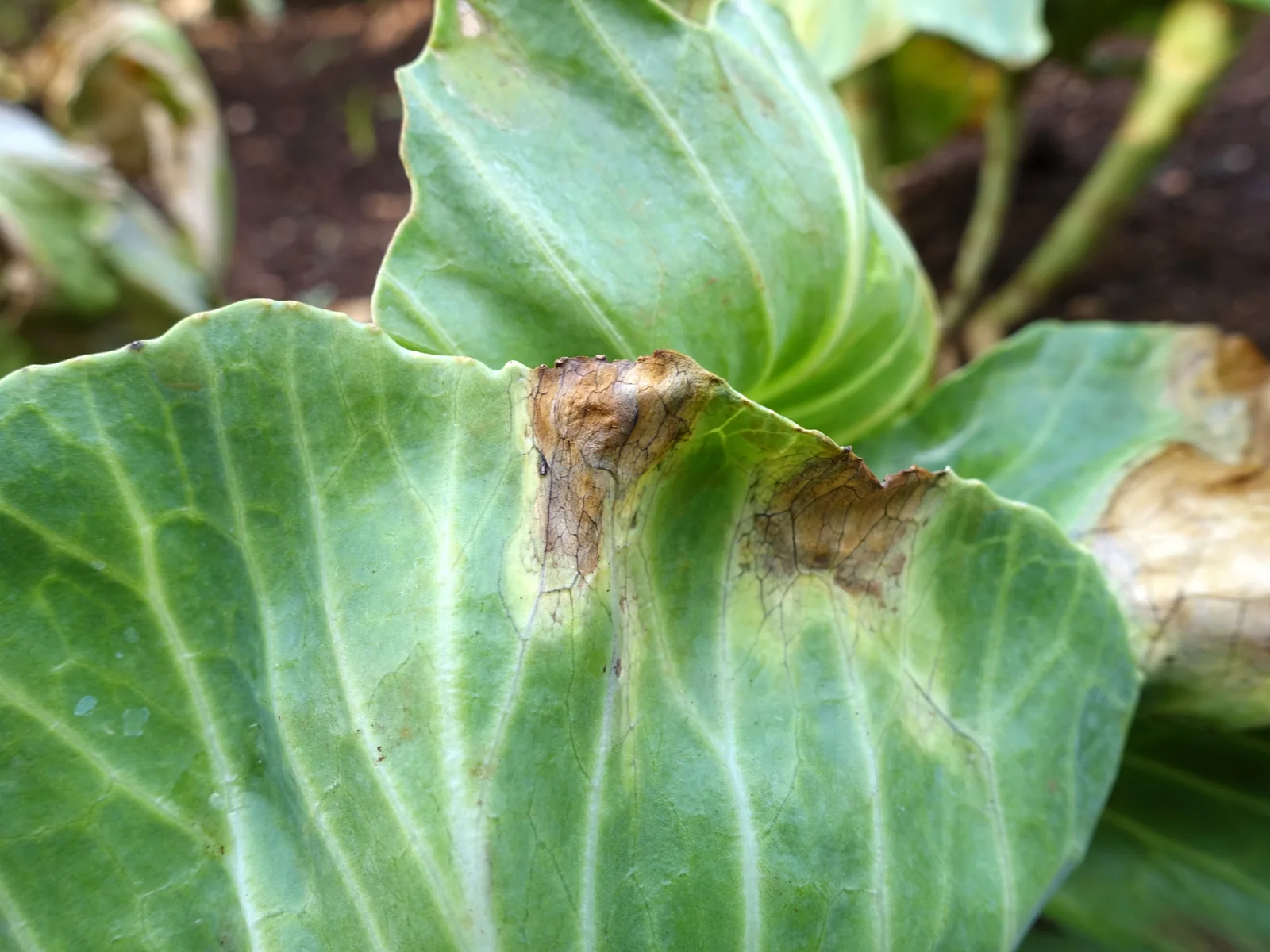
Xcc enters leaves through hydathodes at the margins and moves through the xylem. Familiar symptoms are yellow V-shaped lesions pointing toward the leaf centre and darkened veins. [1] Reducing the seed-associated source of infection is therefore one part of disease prevention, alongside water management, hygiene and control of other infection sources in the growing area.
Similar germination, different seedlings
In an experiment with naturally contaminated Chinese kale seeds, Suwannarat and colleagues compared untreated seeds with dielectric barrier discharge (DBD) and streamer corona discharge (SCD) plasma. Germination in all three groups was 95–96%, with no significant difference, but the proportion of healthy seedlings differed clearly. [3]
| Group | Healthy seedlings (%) | Germination (%) |
|---|---|---|
| Control | 57 ± 3.5 | 95 ± 2.0 |
| DBD | 70 ± 2.8 | 96 ± 2.4 |
| SCD | 78 ± 2.8 | 96 ± 1.0 |
Germination alone would miss this part of the outcome, so the question shifts from “Will it germinate?” to “How well does this lot produce seedlings ready for the next stage?” Applying the 57% versus 78% difference to a hypothetical base of 10,000 seeds gives an arithmetic difference of about 2,100 seedlings.
Keep in mindValues are from Table 1 of [3], with ± values as reported. These seeds were naturally contaminated, not inoculated with a single pathogen, so the result is not a reduction rate for any one pathogen and should not be used as an Xcc or Alternaria reduction rate. The 10,000-seed example is not a forecast of commercial output; actual results depend on the lot, cultivar, pathogen, growing system and treatment conditions.
“Healthy seedlings” must be read from each study's definition and assessment day. Standard seed tests use crop-specific criteria for normal seedlings, so the two terms are not automatically interchangeable. [4] The research proposes effects on both microorganisms and the seed surface, which may alter wettability and water uptake, along with exposure time, moisture and system design, but these Chinese kale results do not isolate each factor's contribution. [3] [5]
How cold plasma acts on seed-borne pathogens
Plasma is an energised gas containing charged particles and reactive species. Cold, or nonthermal, plasma is generated electrically: energetic electrons collide with oxygen, nitrogen and water vapour in air, producing reactive oxygen and nitrogen species (RONS) without heating seeds or water to extreme temperatures. Gas and sample temperatures still depend on the system and exposure time and should be measured during testing. [6] [7]
- Oxygen species such as O3, •OH and H2O2 may contribute to oxidative damage to microbial components
- Nitrogen species such as NO, NO2− and NO3−; NO2− and NO3− may occur in plasma-activated water depending on production conditions
- Ultraviolet light and charged particles can contribute to cell-surface effects in some systems
These species differ in lifetime and transport. •OH is short-lived, whereas H2O2 and NO3− may persist longer in water. Access to a pathogen therefore depends on the species, medium and pathogen location, and internal seed infection requires assessment beyond surface results. [7] [8]
The UC03 studies deliver reactive species to the sample in two ways [5] [9] [7]:
- Place the sample in the system while plasma is generated: direct and liquid-associated configurations such as ESDP (electrohydraulic streamer discharge plasma), which combines SDP (streamer discharge plasma) with activated water at the gas–liquid interface, and GLIP (gas–liquid interface plasma). Sample placement differs between studies
- Use water to carry reactive species to the sample: generate plasma-activated water (PAW) first, then expose the sample. Distinguish PAW activation time from its contact time with seeds or microorganisms
Before choosing a system, consider the steps your seeds must go through: can they contact water, will they need drying afterwards, and how many kilograms must be treated per cycle?
Alternaria: incidence declined as plasma exposure increased
Suwannarat and colleagues inoculated Chinese kale seeds with Alternaria brassicicola and compared how ESDP and SDP changed fungal detection after germination. Inoculation allows direct tracking of the target pathogen; a production lot also requires identifying its pathogens and contamination pattern. [5]
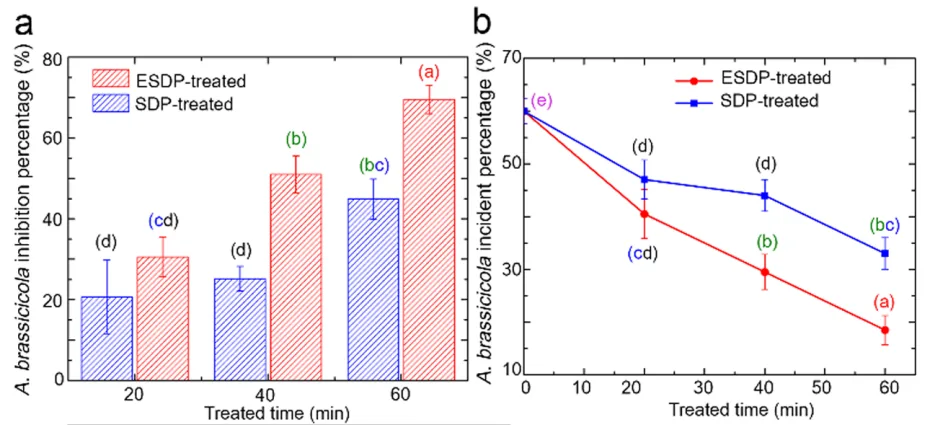
| Metric | Reported value | Origin of the number |
|---|---|---|
| Incidence in germinated seeds (day 7) | Control ≈60% → ESDP 60 min ≈20% (SDP ≈35%) | Read from the graph in Fig. 2b |
| Incidence reduction with ESDP versus untreated seeds | Approximately 75% | Paper abstract |
| Healthy seedlings | ≈70% versus ≈15% | Paper abstract |
The clear trend is that incidence fell as plasma exposure increased, and ESDP produced a greater decline than SDP at the time points shown. This response can define an initial treatment range for a trial with an actual lot, but it still needs comparison with your current method in the same lot, monitoring of germination and seedling quality, and validation with naturally contaminated lots. [5]
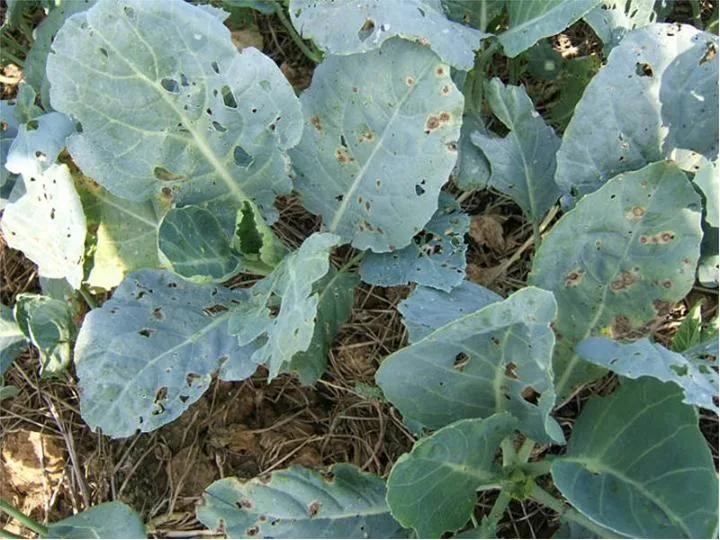
Xcc: fewer infected seeds, but what about the seedlings?
Suwannarat and colleagues inoculated cabbage seeds with Xcc and compared GLIP with PAW. After treatment, the proportion of seeds testing positive for infection declined from 98% in the control to 37% with GLIP and 41% with PAW. [9]
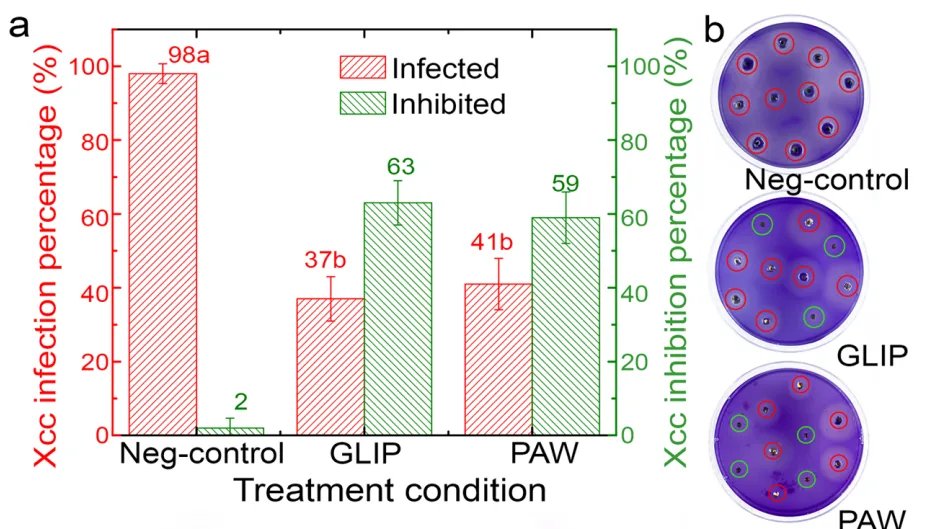
Keep in mind98% → 37%/41% is the proportion of seeds testing positive, a decline of 61 and 57 percentage points, not a CFU reduction percentage. A reduction does not mean the pathogen is absent: some seeds still tested positive, and the residual percentage cannot show whether pathogens are on the surface or inside the seed. [9] [8]
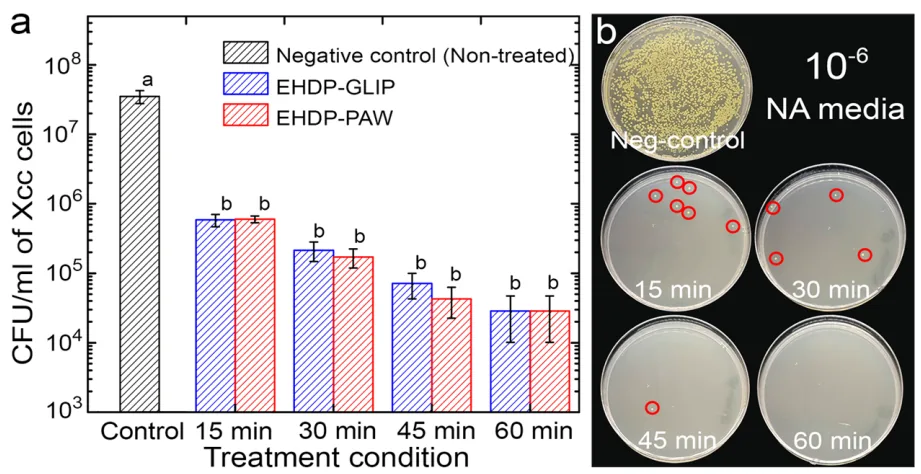
The same study also reports liquid-phase experiments, counting colony forming units (CFU) per millilitre. These describe the pathogen's response in liquid, a different level of measurement from the seed results. [9]
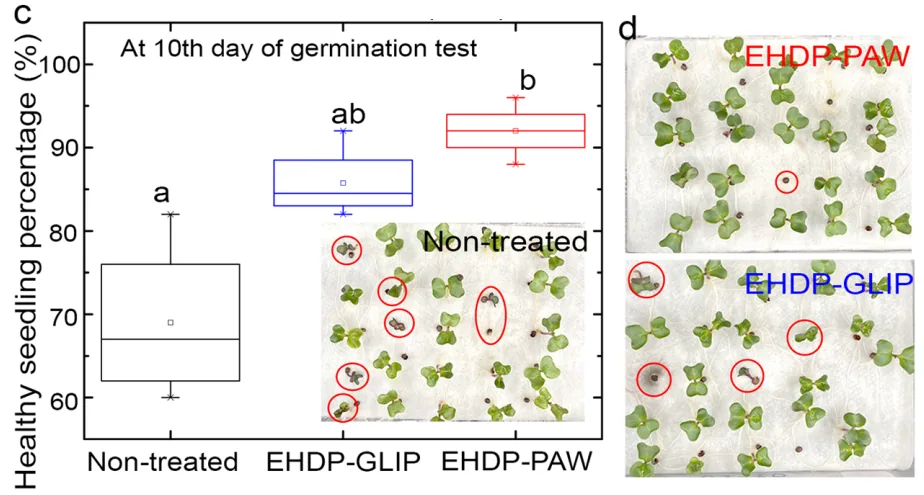
The study also assessed healthy seedlings on day 10. The PAW group had a higher proportion of healthy seedlings than the untreated group in the reported statistical comparison. GLIP lay between them and was labelled “ab”, so it cannot be described as significantly different from either group. [9]
| Level | Question answered | What to measure |
|---|---|---|
| In liquid | Does the pathogen respond? | Culturable counts (CFU) under the test conditions |
| On seeds | How many seeds still test positive? | Seed test results, separate from liquid results |
| After sowing | Are these the seedlings you need? | Seedling quality, separate from pathogen reduction |
Compare with your current method in the same lot
Seed producers already have several treatment options. Placing plasma alongside your current method shows which approach fits your pathogen, seed and production workflow.
| Method | Principle | Strengths | Points to consider |
|---|---|---|---|
| Hot water | Immerse seeds in temperature-controlled water; for brassicas, studied conditions commonly fall around 50 °C for 20–30 minutes, depending on the crop [10] | Studied against several seed-borne pathogens, including use in organic production | The safe temperature window is narrow; excessive heat or time can reduce germination, particularly in older seeds, and drying is required afterwards |
| Chlorine and oxidising agents | Soak or wash the seed surface with a solution | Concentration and contact time can be specified | Acts mainly at the surface; residues, wastewater, rinsing and drying need management |
| Chemical seed coating | Coat seeds with a fungicidal product | Can protect against fungi throughout germination | Match the active ingredient to the target; fungicidal activity does not establish efficacy against Xcc, and product use requirements must be checked |
| Cold plasma / PAW | Use plasma-generated reactive species through direct exposure or water | Generates reactive species electrically; medium and exposure conditions can be selected to suit the seed [6] | Still under research and development; conditions depend on equipment, crop and pathogen, and efficacy against internal seed infection needs case-specific validation. Specify post-treatment handling and monitor moisture and temperature [9] [11] |
Keep in mindNo method suits every case. Individual studies do not establish that plasma is better than every alternative or suitable for every seed type. Compare an untreated control, your current method and plasma within the same lot using the same measurements, and record time, labour and post-treatment steps.
Find a range that reduces pathogens while seeds still pass
The goal is not the strongest condition, but a range that meets the pathogen target while seeds still meet your criteria.
| Range | What you see | Next step |
|---|---|---|
| Too mild | Seed quality passes, but pathogen reduction falls short | Adjust the conditions |
| Workable window | Pathogen target met, germination passes and seedling quality passes | Repeat and assess scaling |
| Too harsh | Strong pathogen reduction, but seed quality fails | Stop and adjust |
Los and colleagues studied both microorganisms and seed quality in wheat and barley. Germination remained similar after short plasma exposures but declined after 20 minutes of direct exposure in the studied system, so longer exposure is not always better. [11] “Cold” also does not mean the sample always stays at room temperature: system design and exposure time affect heat accumulation and seed moisture, so monitor them alongside germination. [11] [6]
Rotondo and colleagues found that PAW acted against both pathogenic microorganisms and beneficial bacteria, and studied its relationship with pH and water chemistry. If seeds receive a biological treatment, check whether the selected process affects microorganisms you want to retain. [7]
Keep in mindReassess the working range when the cultivar, lot, pathogen, plasma system or post-treatment steps change.
Testing treated seeds, and keeping food safety separate
The ISHI (International Seed Health Initiative) method for Xcc in treated Brassica seeds emphasises detecting internal infection and checking whether residues or other microorganisms interfere with pathogen recovery. Its suitability for plasma-treated seeds needs assessment. [8]
Reports should specify sampling, seed count, test method, detection limit and controls, and “not detected” must be interpreted within the method's capabilities. Air- and water-based systems can generate reactive species without adding a formulated chemical, but process-generated species such as H2O2 and nitrogen compounds, and changes in PAW pH, still need assessment under the intended conditions. Include post-treatment rinsing or drying in the trial plan. [7] [8]
Edible young plants, especially sprouts, are another context where seed-associated microorganisms matter. An investigation of the 2011 German outbreak of E. coli O104:H4 linked illness to sprout consumption. [12]
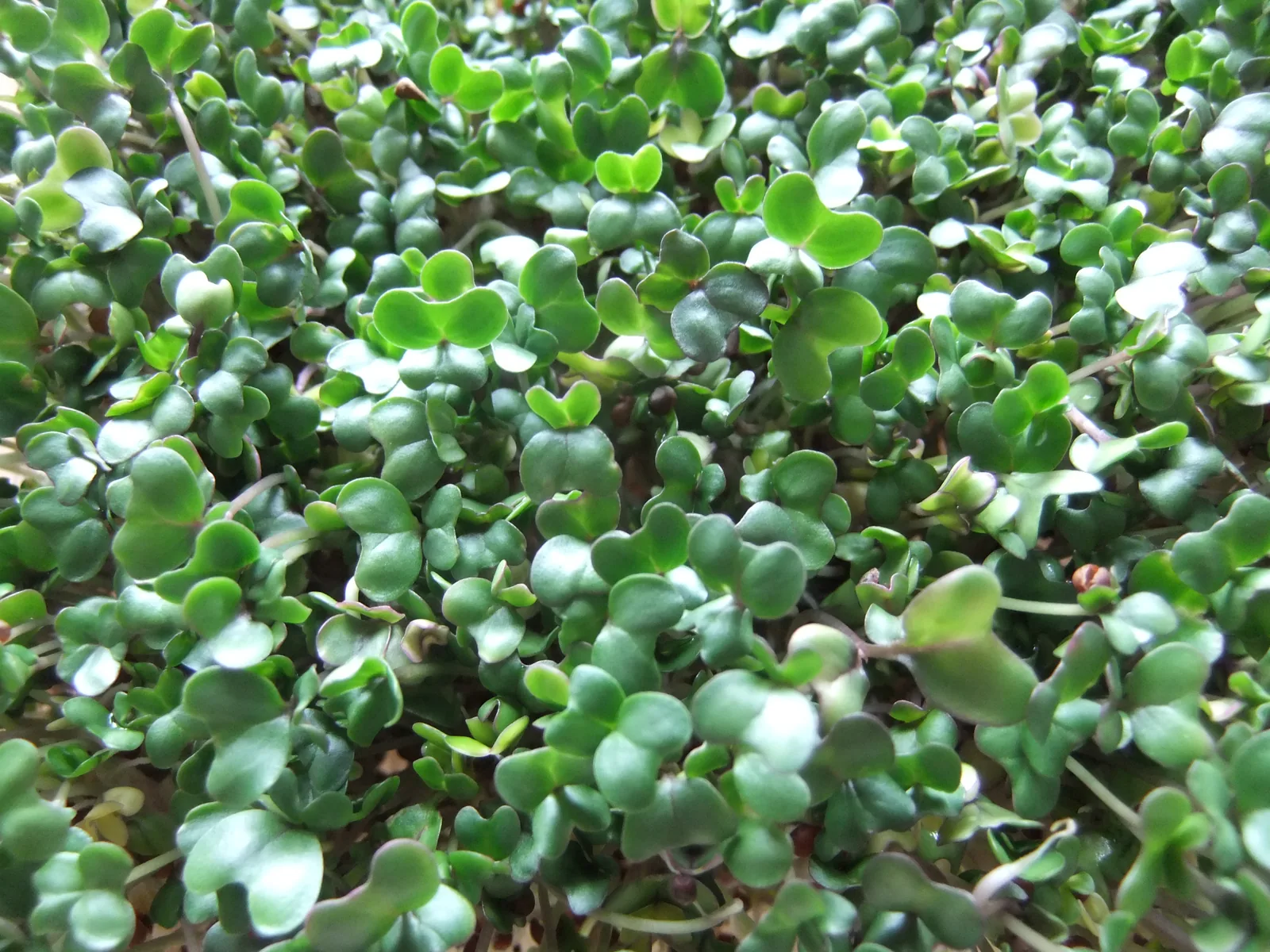
Keep in mindThis is a food-safety application, separate from the plant pathogens in this article. UC03 results cannot stand in for results against human pathogens; plasma use in this market requires separate testing against the relevant organisms and food-safety standards.
Questions to answer before scaling
- Can plasma replace our current treatment immediately? Compare it with your current method within the same lot first
- Does stronger pathogen reduction always improve germination? No. Germination and seedling quality need separate measurements, and more intensive conditions can reduce germination, as the cereal study illustrates [11]
- Can plasma reach pathogens inside seeds? Pathogens beneath the coat or inside a seed may be less accessible than surface pathogens; verify outcomes with an appropriate detection method [9] [8]
- How long can treated seeds be stored? This article does not establish a storage life. Test moisture, storage conditions, germination and possible recontamination over the intended storage period
- When should we scale? When results are repeatable across lots and meet the agreed criteria; then establish batch size, cycle time, drying, throughput and cost using the actual system
Test your lot against the method you use today
Split one seed lot into three groups: untreated, your current method, and plasma or PAW conditions suited to the seed. Measure three outcomes together: target pathogen, germination and seedling quality, so you can decide whether to repeat, adjust or scale. Prepare the details below and send them to the Plasma Innovations team at [email protected]
Email the research team[email protected]See other cold plasma use cases →What to prepare
- Seed type and lot ID
- Pathogen or symptoms of concern, with any test results
- Seed origin, disease history and storage history of the lot
- Current seed treatment method
- Acceptance criteria for pathogen, germination and healthy seedlings
- Whether seeds can contact water, need drying afterwards, and kilograms per cycle
References
- J. G. Vicente and E. B. Holub, "Xanthomonas campestris pv. campestris (cause of black rot of crucifers) in the genomic era is still a worldwide threat to brassica crops," Molecular Plant Pathology, vol. 14, no. 1, pp. 2–18, 2013, doi: 10.1111/j.1364-3703.2012.00833.x.
- N. W. Schaad, W. R. Sitterly, and H. Humaydan, "Relationship of incidence of seedborne Xanthomonas campestris to black rot of crucifers," Plant Disease, vol. 64, pp. 91–92, 1980, doi: 10.1094/PD-64-91.
- S. Suwannarat, S. Homkanchan, J. Puttha, and S. Srisonphan, "Nonthermal plasma engineering for seed disinfection and germination using streamer corona and dielectric barrier discharges," Results in Engineering, vol. 26, Art. no. 104884, 2025, doi: 10.1016/j.rineng.2025.104884.
- International Seed Testing Association, "International Rules for Seed Testing," 2026 ed. [Online]. Available: seedtest.org. Accessed: Sep. 28, 2026.
- S. Suwannarat, C. Thammaniphit, and S. Srisonphan, "Electrohydraulic streamer discharge plasma-enhanced Alternaria brassicicola disinfection in seed sterilization," ACS Applied Materials & Interfaces, vol. 13, no. 37, pp. 43975–43983, 2021, doi: 10.1021/acsami.1c10771.
- P. Bourke, D. Ziuzina, D. Boehm, P. J. Cullen, and K. Keener, "The potential of cold plasma for safe and sustainable food production," Trends in Biotechnology, vol. 36, no. 6, pp. 615–626, 2018, doi: 10.1016/j.tibtech.2017.11.001.
- P. R. Rotondo et al., "Physicochemical properties of plasma-activated water and associated antimicrobial activity against fungi and bacteria," Scientific Reports, vol. 15, Art. no. 5536, 2025, doi: 10.1038/s41598-025-88369-7.
- International Seed Federation, ISHI-Veg, "Method for the detection of Xanthomonas campestris pv. campestris in disinfested/disinfected seed of Brassica spp.," Jul. 2017. [Online]. Available: worldseed.org. Accessed: Sep. 28, 2026.
- S. Suwannarat, N. Tephiruk, S. Sunan, K. Ruangwong, and S. Srisonphan, "Disinfection efficacy of electrohydraulic discharge plasma against Xanthomonas campestris pv campestris: A sustainable seed treatment approach," ACS Applied Bio Materials, vol. 7, no. 3, pp. 1469–1477, 2024, doi: 10.1021/acsabm.3c00862.
- E. Nega, R. Ulrich, S. Werner, and M. Jahn, "Hot water treatment of vegetable seed: An alternative seed treatment method to control seed borne pathogens in organic farming," Journal of Plant Diseases and Protection, vol. 110, no. 3, pp. 220–234, 2003. [Online]. Available: Organic Eprints 7672. Accessed: Sep. 28, 2026.
- A. Los et al., "Improving microbiological safety and quality characteristics of wheat and barley by high voltage atmospheric cold plasma closed processing," Food Research International, vol. 106, pp. 509–521, 2018, doi: 10.1016/j.foodres.2018.01.009.
- U. Buchholz et al., "German outbreak of Escherichia coli O104:H4 associated with sprouts," New England Journal of Medicine, vol. 365, no. 19, pp. 1763–1770, 2011, doi: 10.1056/NEJMoa1106482.