

Herb in Thai notifiable formulas
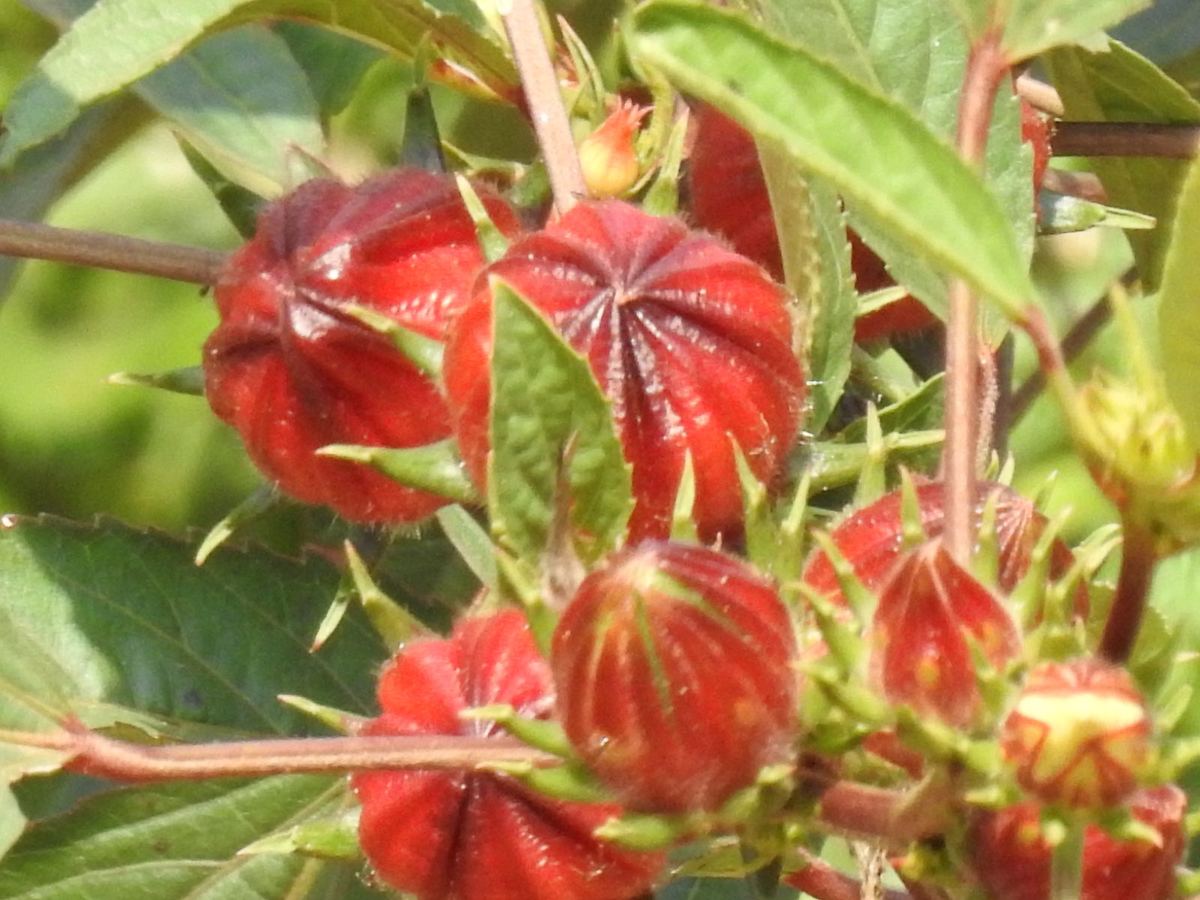
Roselle
กระเจี๊ยบแดง · Krachiap Daeng
Hibiscus sabdariffa L.
- Family
- Malvaceae
- Part used
- calyx
- Crude drug
- Hibisci Sabdariffae Calycis et Epicalycis
- Other names
- Jamaica Sorrel, Red Sorrel, Sorrel
- In the announcement
- Used in 2 notifiable formulas
Thai Herbal Pharmacopoeia (THP)
Constituents and quality criteria of Roselle
Summarised from the Roselle monograph of the Thai Herbal Pharmacopoeia, Department of Medical Sciences, the standard used to test the dried persistent calyx and epicalyx collected during fruiting.
Marker with a minimum content set by the pharmacopoeiaAcids, calculated as citric acid (dried basis)
CriterionNot less than 12.0% w/w
Constituents
Roselle contains anthocyanins, of which delphinidin-3-sambubioside and cyanidin-3-sambubioside are major components. It also contains organic acids (e.g., citric acid, hibiscus acid, hydroxycitric acid, malic acid), phenolic acids (e.g., protocatechuic acid), flavonoids, mucilages, pectins, potassium salts, etc.
Raw material quality criteria
| Foreign matter | Not more than 2.0% w/w |
| Loss on drying | Not more than 12.0% w/w |
| Total ash | Not more than 10.0% w/w |
| Acid-insoluble ash | Not more than 1.5% w/w |
| Water-soluble extractive | Not less than 45.0% w/w |
| Ethanol-soluble extractive | Not less than 7.0% w/w |
Storage: Roselle shall be kept in well-closed containers, protected from light,and stored in a dry place.
Source: Thai Herbal Pharmacopoeia, Department of Medical Sciences (online edition, accessed 21 October 2026)Read the full THP monograph
Formulas using Roselle
2 formulas containing Roselle
Select a formula to see its ingredients and indications. Formula names and indications are a reference translation; the Thai announcement is the legal text.
Development potential
Develop Roselle into a product with the TIBD group
In notifiable formulas2 formulas2 as a single-herb formula
THP raw-material criteria6 testsfor acceptance testing before production
Marker with a minimum contentNot less than 12.0% w/wAcids, calculated as citric acid (dried basis)
Testing in the groupVISBIOTotal anthocyanin testing
Three ways forward 1Notify a listed formula2Adapt it through detailed notification3Develop a Category B herbal medicine or Category C health productSee the development pathway
VISBIO · laboratory in the TIBD group
Total anthocyanin testing
Analytical testing of Roselle raw materials and products by VISBIO, the laboratory in our group.
See the VISBIO serviceTIBD · extract developmentRoselle extract
TIBD develops roselle extracts for brands that need a raw material or a custom specification.
See the roselle extract pageK-API · manufacturing in the groupExtract and manufacture at K-API
The TIBD group plant licensed by the Thai FDA to manufacture herbal products, so extraction and production stay within the group.
See the K-API plantTIBD · consultationPlan a product with Roselle
We check whether your formula qualifies for notification, detailed notification or registration with the Thai FDA, then prepare the filing documents.
Talk to our team on LINE