

Cold Plasma / UC07
Use case UC07 · Hydroponic Green Oak lettuce
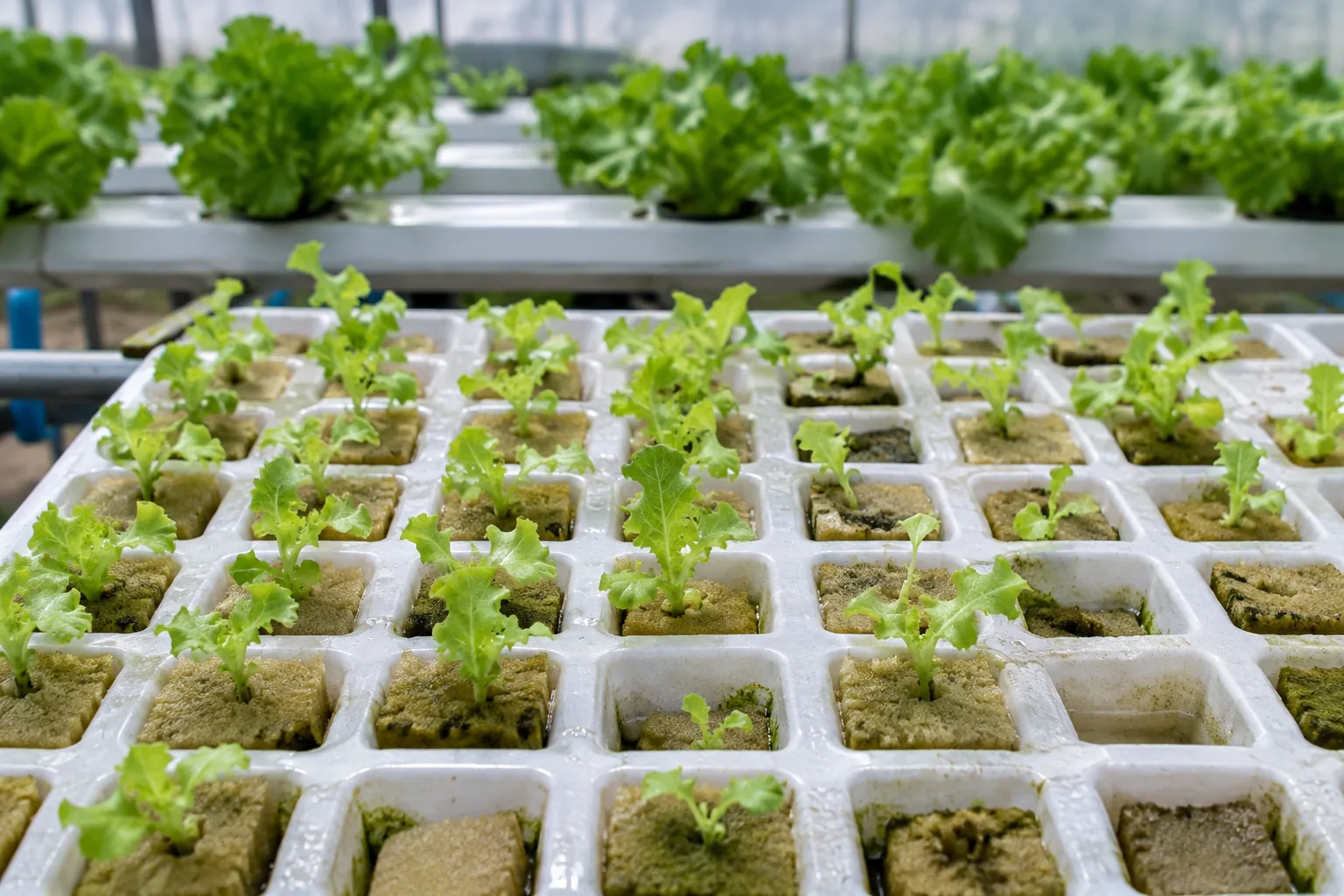
Fewer empty cells, less waiting, more Green Oak seedlings ready to transplant
A Green Oak lettuce study found that some plasma seed-priming methods increased germination and shortened the wait. The next question is whether that gives your trays more transplant-ready seedlings.
Research by Assoc. Prof. Dr. Siwapon Srisonphan and the Plasma Innovations team, Department of Electrical Engineering, Kasetsart University
≈95%Germination with submerged EHDP, versus approximately 80% in the control
≈50 hMean germination time (MGT) with submerged EHDP, versus approximately 60 hours in the control
≈30 seedsAdditional germinated seeds per 200 sown, using the study's 80% versus 95%
Figures in this article are laboratory results under the conditions of the cited studies. Results with your own lot or growing system need to be tested.
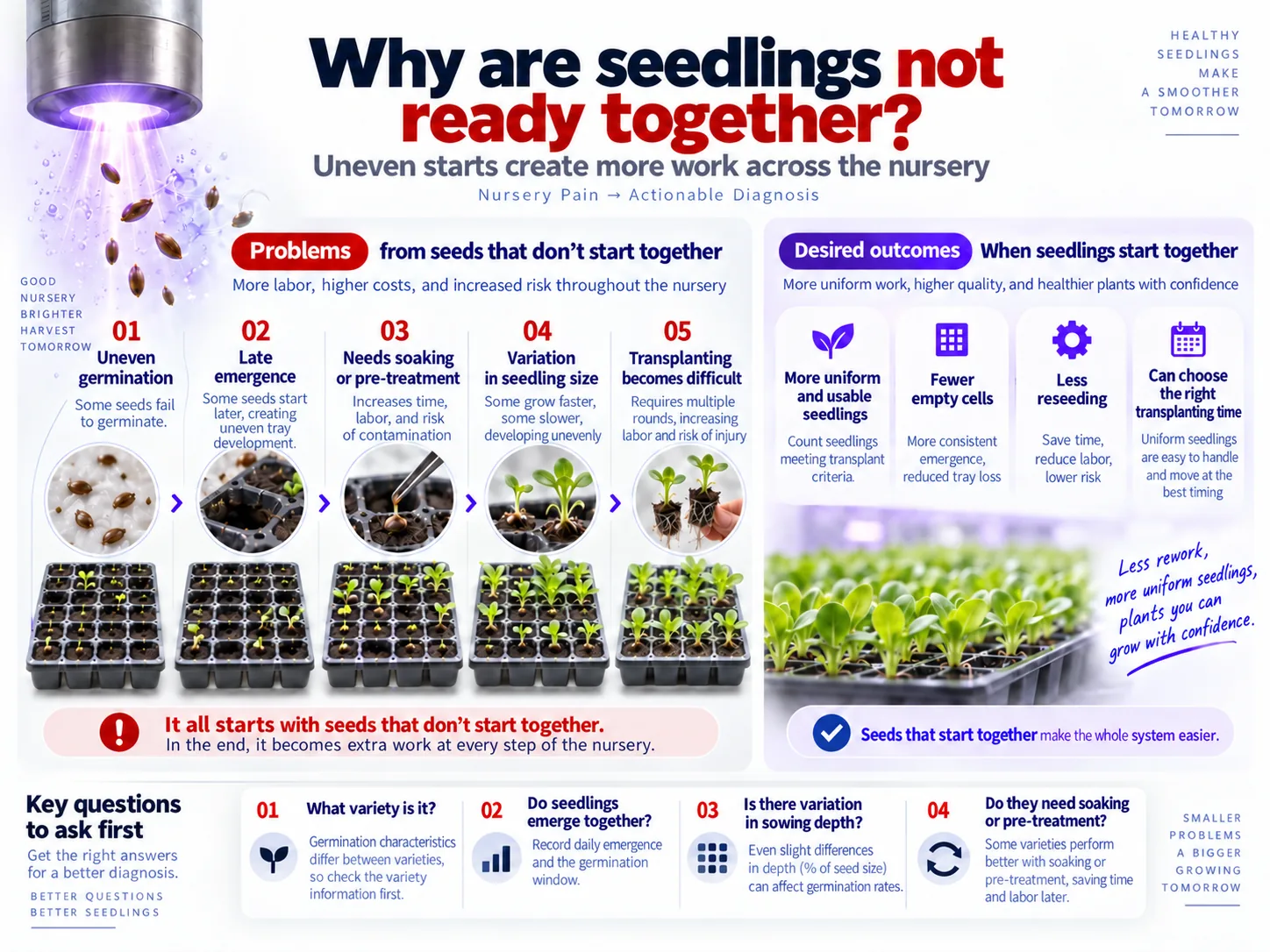
Uneven seedlings may start at germination
Nursery success is not just germination; it means enough usable seedlings ready for the transplant schedule. Empty cells, late starts and uneven development add sorting, reseeding and scheduling work.
So the first question is not “how many minutes of plasma?” but where your trays lose efficiency, and what to measure:
- Empty cells (too few seeds germinate): germination percentage and seedlings meeting specification per 100 seeds
- Long waits (slow starts): mean germination time (MGT) and the day seedlings are ready for selection and transplanting
- Uneven readiness: the germination window and the number meeting transplant criteria on the same day
The Green Oak study compared five seed-priming groups
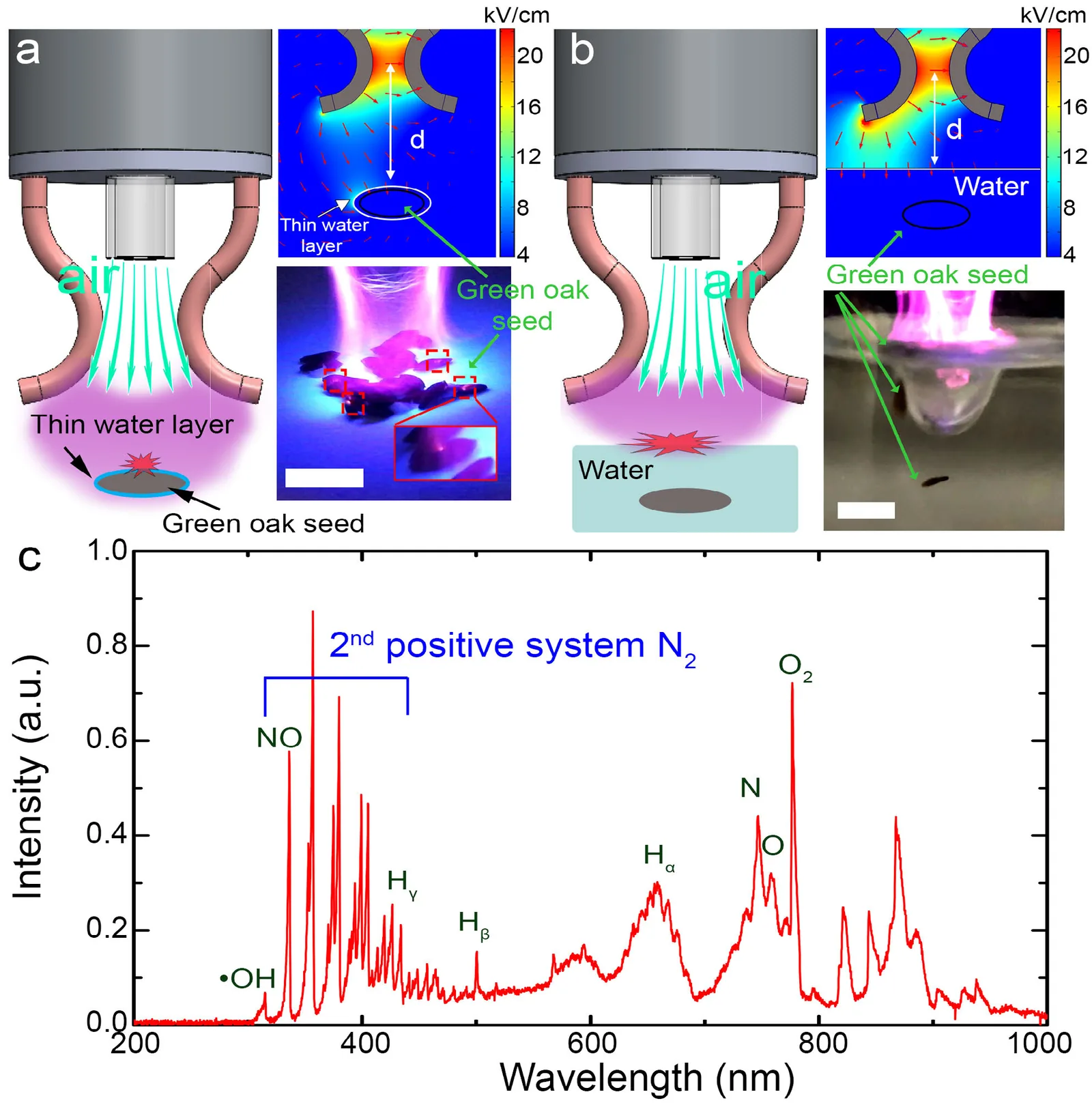
The primary study by Tephiruk et al. (IEEE Access, 2023) followed Green Oak lettuce (Lactuca sativa L.) from germination to growth in hydroponics. It compared two forms of electrohydraulic discharge plasma (EHDP) priming with hydropriming (water) and osmopriming (KNO3 solution). [1]
- Wet-surface EHDP: seeds are briefly soaked in deionized water, leaving a thin surface water layer, then exposed to plasma
- Submerged EHDP: seeds are submerged during plasma treatment, then soaked further in the plasma-activated water (PAW) before sowing
 Patented by Plasma Innovations
| Group | Conditions reported in the study's Methods [1] |
|---|---|
| Control | No seed priming |
| Wet-surface EHDP | Soak in deionized water for 1 minute, then expose to plasma for 2 minutes |
| Submerged EHDP | Plasma exposure while submerged for approximately 1 minute, followed by 12 hours of soaking in PAW |
| Osmopriming | Soak in 0.5% KNO3 solution for approximately 12 hours |
| Hydropriming | Soak in deionized water for 12 hours |
Germination tests used 100 seeds per replicate and 4 replicates. The water- and KNO3-primed groups help show which preparation method drives the difference. [1]
Results: more and faster germination
The study's Results report the highest germination percentage and shortest mean germination time for submerged EHDP. [1]
| Metric | Control | Submerged EHDP | Difference |
|---|---|---|---|
| Germination percentage | ≈80% | ≈95% | Significant |
| Mean germination time (MGT) | ≈60 h | ≈50 h | Significant |
| Germination window U75–25 (time from 25% to 75% germination) | ≈15 h | ≈5 h (both plasma methods) | Not statistically significant |
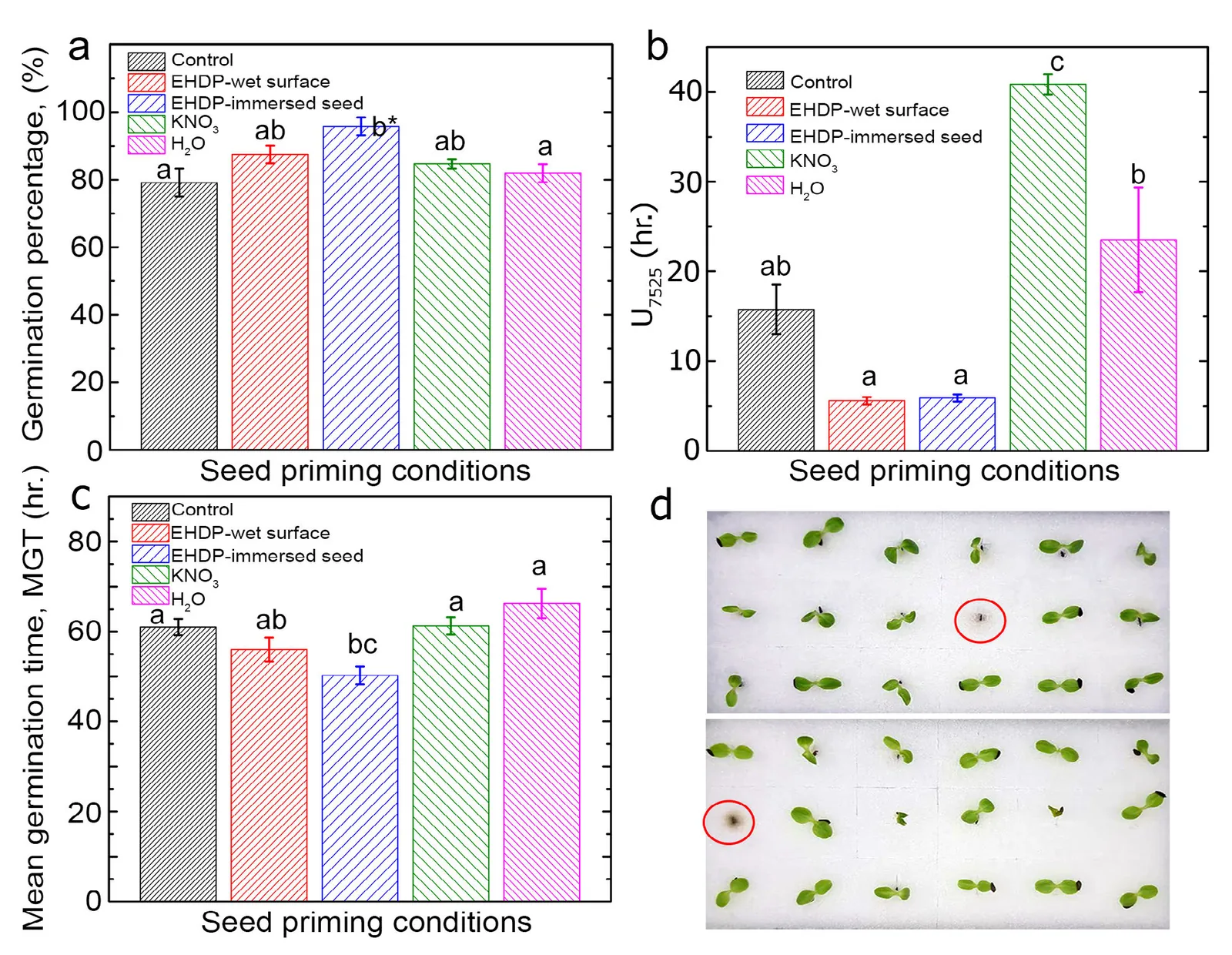
Submerged EHDP germination differed significantly from the control and hydropriming groups. Wet-surface EHDP had a higher mean than the control but was not significantly different. Table values are approximate, from Results and Figure 2. [1]
Keep in mindA lower U75–25 means germination is concentrated in a narrower interval. However, the plasma groups share statistical letters with the control in Fig. 2(b), so this graph does not establish a significant difference from the control, despite the wording in Results. [1]
Keep in mindThe abstract reports 98.3% germination and MGT of approximately 1.87 days, while Results reports 95% and approximately 50 hours. This page uses Results and Figure 2. Exact figures should be checked against raw data before setting any performance guarantee. [1]
How plasma changes the water
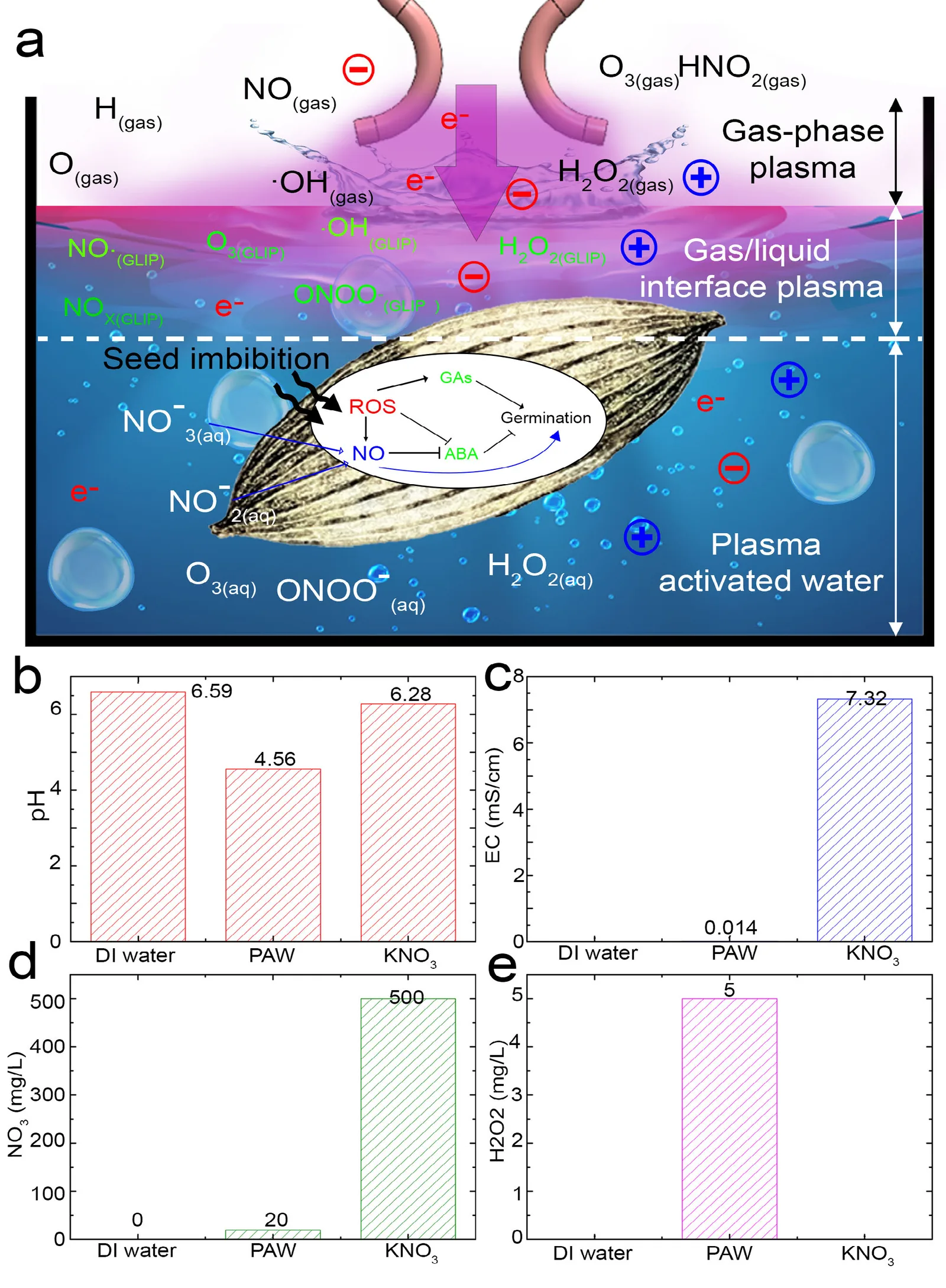
Plasma changes water properties, and seeds meet that changed environment at their surface. In this dataset, PAW had lower pH than deionized (DI) water and contained measured nitrate and hydrogen peroxide. [1]
| Measurement | PAW | Note |
|---|---|---|
| pH | 4.56 | DI water: 6.59 |
| NO3− | 20 mg/L | Detected concentration |
| H2O2 | 5 mg/L | Detected concentration |
| EC (conductivity) | 0.014 mS/cm |
 Patented by Plasma Innovations
Read together, these numbers characterize the water the seeds encounter, but lower pH alone does not predict better germination. Water starts imbibition into seed tissues, and plasma-derived species may also affect signaling inside the seed. [1]
Keep in mindThe authors propose this mechanism in Figure 3 but did not measure internal seed mechanisms directly, so the main cause of the germination response remains unresolved. [1]
How water-borne species affect plants
Nitrate is a nitrogen source and also participates in plant signaling. H2O2 can participate in signaling and oxidative responses. Effects depend on concentration and exposure conditions; more is not necessarily better. [2]
Kučerová et al. compared PAW irrigation with H2O2 and NO3− solutions in soil-grown lettuce. PAW and a chemically equivalent solution gave similar dry weight but different pigment, photosynthetic and SOD-enzyme responses. Measuring water composition together with plant responses therefore helps explain differences between conditions. [2]
After transplanting, growth did not differ
After the nursery stage, the plants were moved into hydroponics and their shoots and roots were monitored. Plant height, root length, stem diameter, leaf thickness and leaf number were similar among groups. [1]
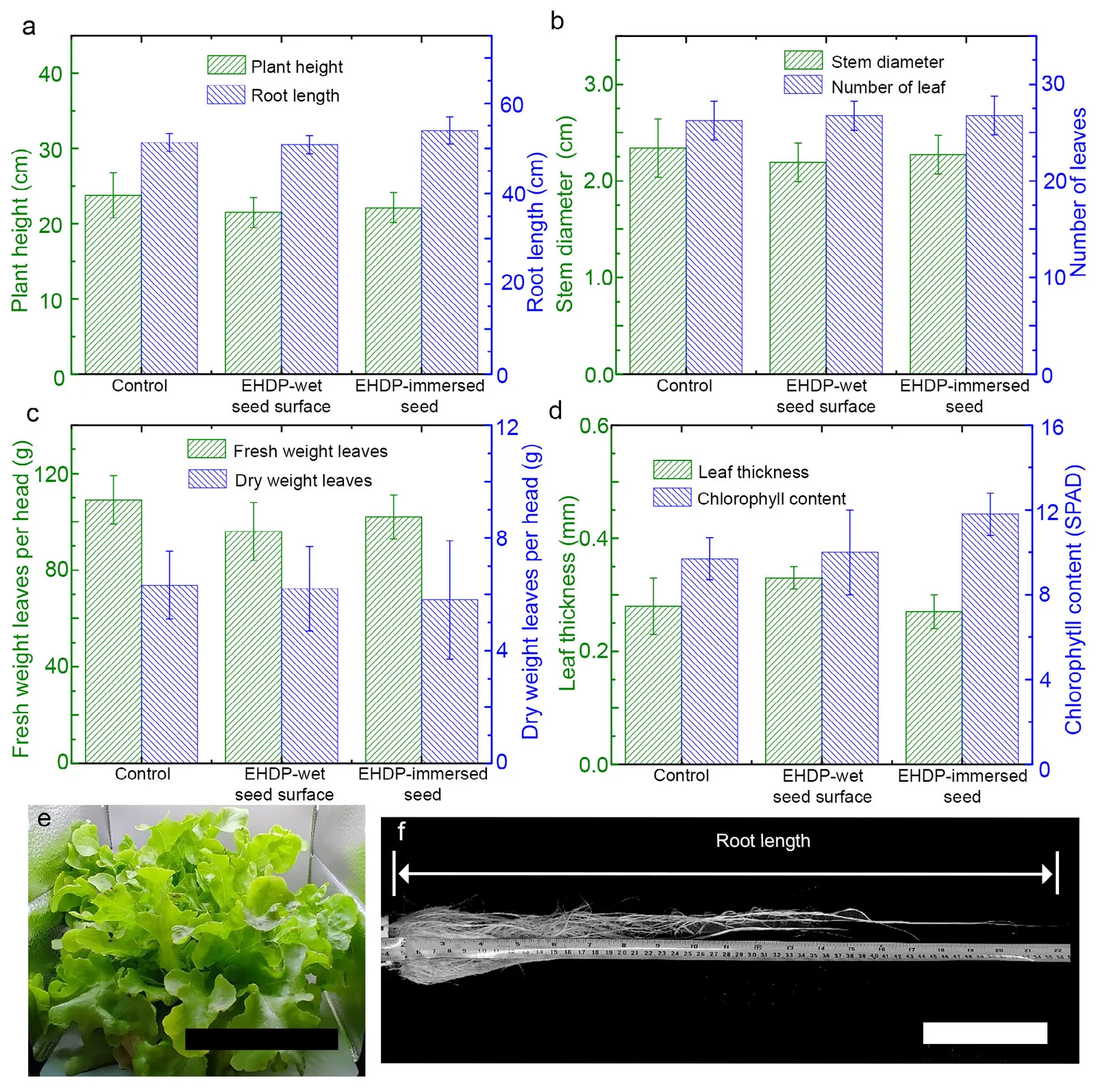
Keep in mindBetter germination does not by itself show greater growth after transplanting. The study found clear germination effects but no significant differences in the reported post-transplant growth metrics. Effects on transplant-ready counts and scheduling remain to be followed up. [1]
Other work also suggests responses vary by cultivar and growth stage. Jankaitytė et al. plasma-treated seeds of two lettuce cultivars and grew them aeroponically. They saw germination and early-growth responses, but no effect on biomass accumulation or shoot-to-root ratio in either cultivar, while some physiological and biochemical responses differed by cultivar. [3]
When to test it in your own trays
Priming is most relevant when the bottleneck begins at germination: low germination, widely spread emergence, high-value seeds or a demanding transplant schedule. To turn germination results into nursery value, track three things:
- When are they ready? The day seedlings meet the same size and root-condition criteria
- How many are usable? Selected seedlings relative to the initial seed count
- How much work does it save? Sorting rounds, working time and cost per usable seedling
| Starting from 200 seeds | Germinated seeds |
|---|---|
| At 80% (control level) | 160 |
| At 95% (submerged EHDP level) | 190 |
Using the study percentages, this equals approximately 30 additional germinated seeds per 200 sown. [1] However, nursery trials across vegetable species show species-specific responses, so test your actual cultivar, seed lot and growing method. [4]
From trial findings to practical use
Establish your lot's baseline first: germination percentage, mean germination time, emergence window and cells needing reseeding. Then split the same lot between your current method and the trial method under the same growing conditions, and measure only what affects transplant-ready output and scheduling.
- Current method
- Same-lot trial
- Count transplant-ready seedlings
- Refine conditions
- Scale
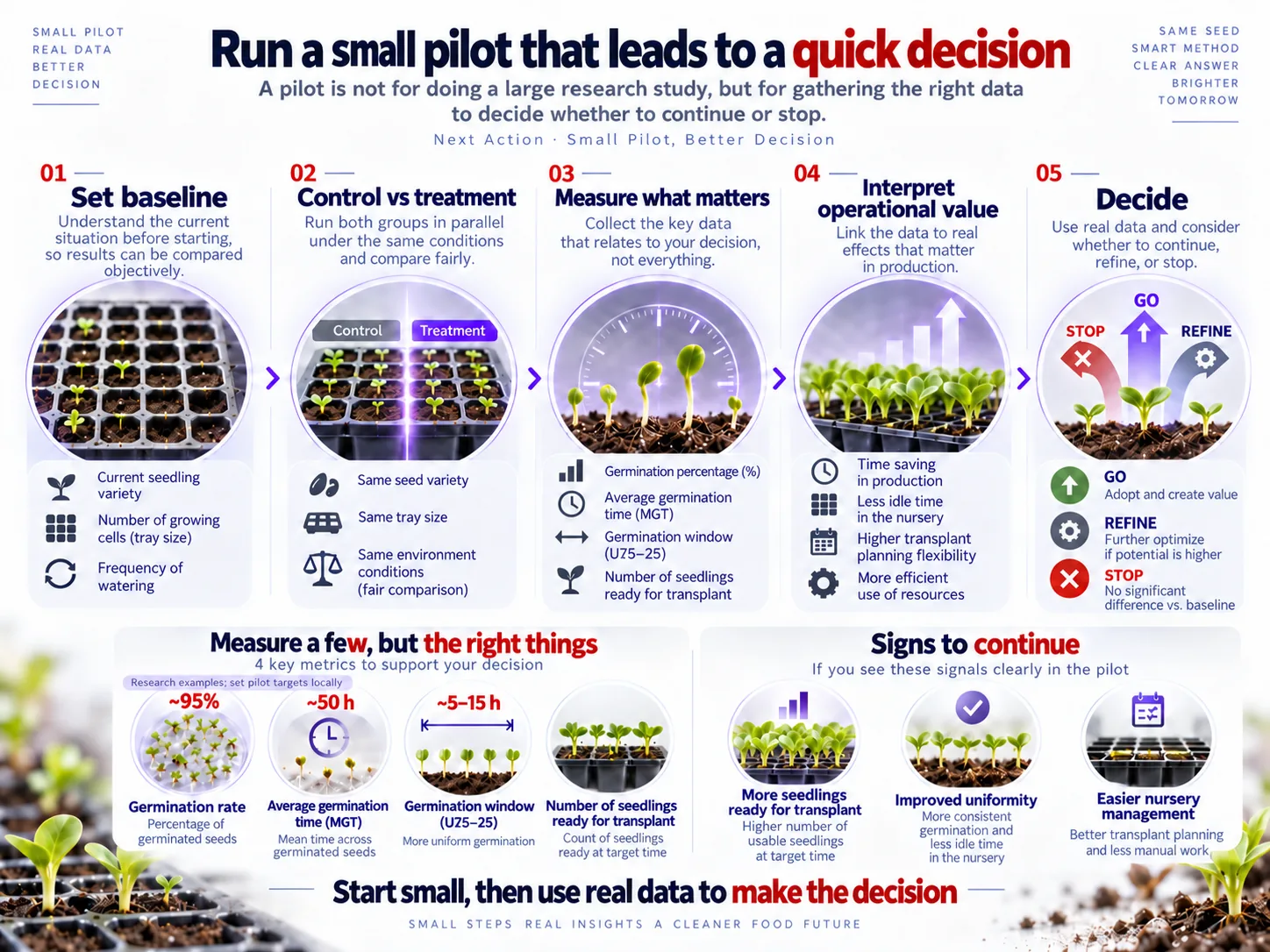
The Green Oak results show that priming can change germination count and speed. The next step is to test whether this gives more seedlings ready together when you need them, a question a trial with your own trays can answer. [1]
Discuss seed priming for your growing system
Prepare five facts about your nursery and send them to the Plasma Innovations team at [email protected] to design a small trial around your tray problem.
Email the research team[email protected]See other cold plasma use cases →What to prepare
- Cultivar and seed lot
- Current germination rate
- Trays per cycle
- Target transplant date
- Transplant-readiness criteria
References
- N. Tephiruk, K. Ruangwong, S. Suwannarat, W. Kanokbannakorn, and S. Srisonphan, "Electrohydraulic discharge induced gas-liquid interface plasma for seed priming in hydroponics," IEEE Access, vol. 11, pp. 124634–124642, 2023, doi: 10.1109/ACCESS.2023.3329811.
- K. Kučerová, M. Henselová, Ľ. Slováková, M. Bačovčinová, and K. Hensel, "Effect of plasma activated water, hydrogen peroxide, and nitrates on lettuce growth and its physiological parameters," Applied Sciences, vol. 11, no. 5, Art. no. 1985, 2021, doi: 10.3390/app11051985.
- E. Jankaitytė et al., "Seed treatment with cold plasma induces changes in physiological and biochemical parameters of lettuce cultivated in an aeroponic system," Agronomy, vol. 15, no. 6, Art. no. 1371, 2025, doi: 10.3390/agronomy15061371.
- S. Locatelli, S. Triolone, M. De Bonis, G. Zanin, and C. Nicoletto, "Non-thermal plasma-activated water enhances nursery production of vegetables: A species-specific study," Agronomy, vol. 15, no. 1, Art. no. 209, 2025, doi: 10.3390/agronomy15010209.